Last updated November 25, 2026







Free written scope consultation - allowances, timeline, and change-order rules on paper before a single trade is scheduled
Construction Warning Signs: An Elk Grove Homeowner’s Reference Guide
A diagonal crack above a doorframe in an Elk Grove home built between 1998 and 2005 tells a very different story than the same crack in a 1960s Sacramento bungalow. The soil, the slab construction, and the building codes are all different, and treating them the same leads to misdiagnosis. Most warning-sign guides stay vague because they’re written for the whole country at once. This one is written for Elk Grove specifically: slab-on-grade foundations, clay-heavy soils, and a climate where rain is rare but arrives with force. You’ll learn which cracks point to foundation movement and which are cosmetic, how clay-soil seasonal movement differs from true settlement, and how to tell a failing substrate from a failing surface. More important, you’ll finish knowing which signs mean call now and which you can watch for a season.
Quick Answer
Construction warning signs in Elk Grove homes usually fall into two groups: symptoms that indicate active foundation or structural movement, and symptoms that indicate water intrusion or a failing substrate under a finished surface. Diagonal cracks that widen over months, doors and windows that stop closing square, and water stains that return after every rainy season point to something worth professional attention. Hairline cracks that stay the same size, minor grout lines, and a single sticking door are usually cosmetic and can be monitored.
Styles & brands we work with
- Kitchen remodeling
- Bathroom remodeling
- Home additions & ADU
- Roofing
- Windows & doors
- Driveway & pavers
- Fence
Table of Contents
- What Crack Patterns Tell You in Slab-on-Grade Homes
- How to Tell Clay-Soil Movement from Real Settlement
- Water Intrusion Signs in a Dry-Climate Home
- Cabinet, Tile, and Flooring Signs That Point to the Substrate
- Exterior and Envelope Warning Signs
- Warning Signs During a Renovation
- Call Now vs. Monitor for a Season
- Common Mistakes to Avoid
What Crack Patterns Tell You in Slab-on-Grade Homes

Elk Grove homes are overwhelmingly built on slab-on-grade foundations, which means the concrete slab sits directly on the prepared soil with no crawlspace or basement beneath. That construction method produces a predictable set of crack patterns, and each pattern carries a different message. A crack’s direction, width, and location matter far more than whether a crack exists at all.
Here’s how to read the most common patterns:
- Vertical cracks in the slab or walls: generally the least concerning. Vertical cracks are usually shrinkage cracks that form as concrete cures, and they tend to stay put. Width matters; a crack that stays under the width of a nickel is usually a monitoring item.
- Diagonal cracks radiating from the corners of doors and windows: the classic signature of differential movement. One portion of the foundation is moving differently than another, and the diagonal crack is the wall’s way of coping with the stress. Width and growth over time are the deciding factors.
- Stair-step cracks in brick or block: a crack that follows the mortar joints in a staircase pattern suggests movement concentrated along a specific elevation. This pattern deserves attention because it often tracks with a foundation edge.
- Horizontal cracks in a stem wall or foundation wall: the least common and most serious pattern in slab-on-grade construction. Horizontal cracking can indicate lateral pressure, and it’s a call-a-professional item rather than a monitoring item.
- Cracks that return after patching: a crack that reappears in the same place after being filled tells you the movement that caused it is still active.
In our experience working on Elk Grove homes, the single most useful thing a homeowner can do is date the crack. Take a photo with something for scale, write the date on the back or in the file name, and take the same photo again in three months. A crack that hasn’t moved is a different conversation than one that’s grown. If you’re planning a home remodeling project anyway, the time to document crack patterns is before demolition starts, not after.
How to Tell Clay-Soil Movement from Real Settlement
Elk Grove sits on expansive clay soils, and those soils swell when they absorb moisture and shrink as they dry. That seasonal expansion and contraction moves foundations, and it produces cracks and sticking doors that mirror genuine structural settlement closely enough to fool most homeowners. The difference between the two is timing and reversibility.
Seasonal movement has a rhythm. If you watch the same door or window over a full year, you’ll notice it binds during the dry months and frees up after the rains return. Same with cracks: they open in late summer and close in winter. Genuine settlement doesn’t reverse. It progresses steadily in one direction regardless of the season, and it tends to concentrate on one side of the house rather than distributed around the perimeter.
Here’s a practical way to tell them apart:
- Track one door for a full year. Note in each season whether it sticks, scrapes, or closes cleanly. If it frees up after rain, you’re likely seeing clay-soil movement.
- Photograph the same crack on a schedule. Every three months, with a scale reference. Seasonal cracks ebb and flow; settlement cracks only grow.
- Look at the pattern around the house. Seasonal movement shows up in different places at different times. Settlement concentrates. If the same corner keeps getting worse while everything else stays fine, that’s a settlement signal.
- Check the drainage before you assume settlement. Water pooling near the foundation changes how the clay behaves, and redirecting roof runoff or regrading a swale sometimes stabilizes conditions that look structural.
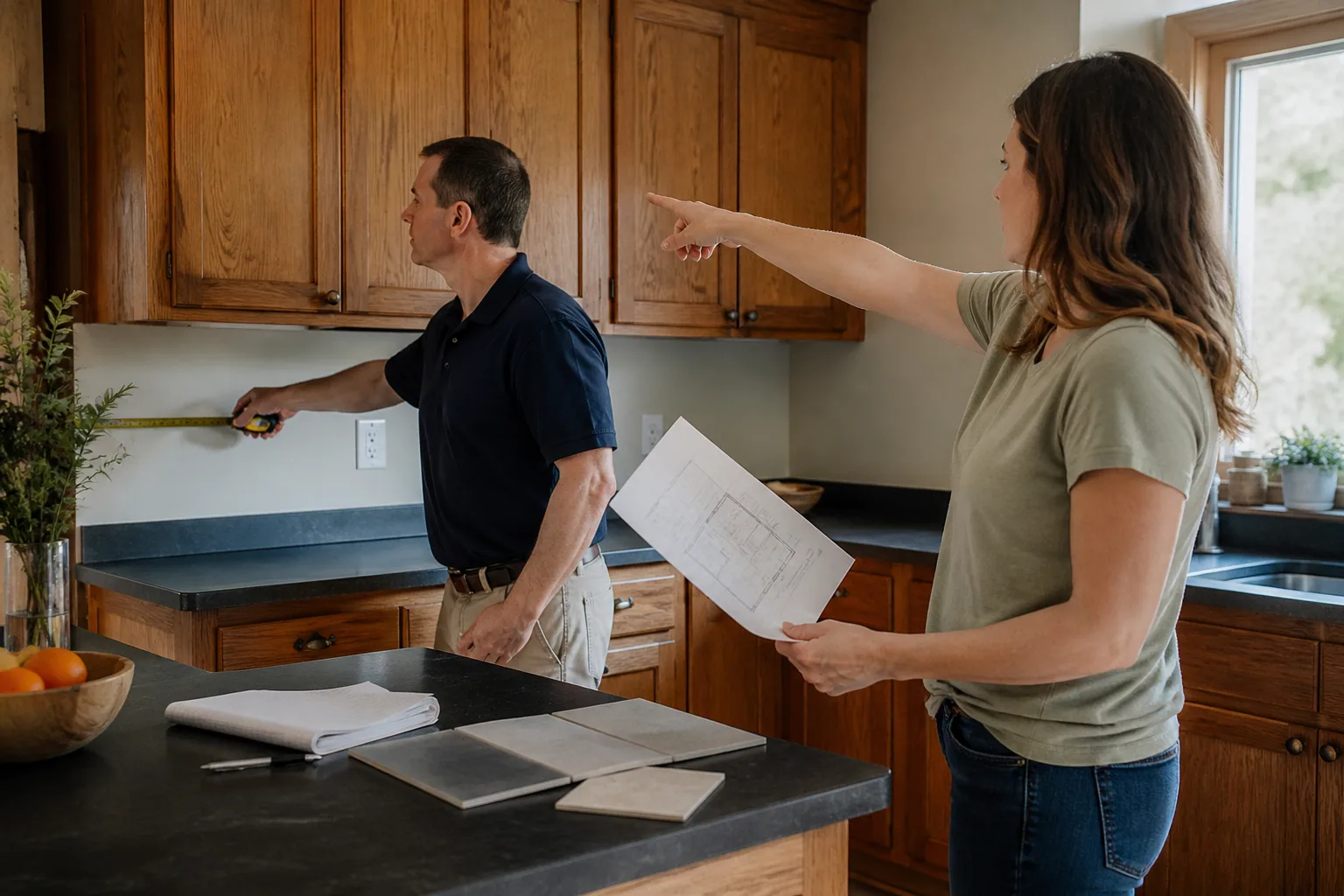
None of this replaces an inspection if you’re genuinely worried. But it does mean you can spend a season gathering evidence before you pay for one. If a planned Elk Grove Remodeling project is on the horizon, note that foundation conditions affect everything above them, and it’s worth resolving questions before cabinets and flooring go in.
Water Intrusion Signs in a Dry-Climate Home

In wet climates, water intrusion announces itself. In Elk Grove, most of the annual rainfall arrives in a concentrated stretch, and the signs of a leak are subtler and easier to miss. A wet-climate homeowner learns to check the basement every spring. An Elk Grove homeowner has no basement and might not look at the same wall twice for a year.
Watch for these less-obvious indicators:
- Paint that bubbles or blisters in a small patch: on interior walls, a localized bubble is often a slow moisture source behind the drywall, not a paint failure. The bubble is the paint releasing from a surface that’s changed.
- Stains that return after cleaning: a water stain that comes back after every winter is proof the source is still active. A stain that never returns was likely a one-time event.
- Musty smell in a room with no obvious dampness: the nose is often more sensitive than the eyes to a slow leak in a wall cavity or under a floor.
- Efflorescence: the white, powdery mineral deposit on concrete or masonry shows where water has passed through and evaporated. It’s a clue about where moisture is traveling.
- Baseboards that swell or separate at a corner: a swelling baseboard is a moisture tell, especially when the paint on the wall above looks fine.
- Roof or window flashing stains on interior drywall: look high on the wall and at ceiling corners after the first big storm of the season, not in the middle of a dry stretch.
Because Elk Grove’s rain is concentrated, checking after the first storm of the year and again after the last is more useful than a year-round survey. If you’re adding a kitchen remodeling job this year, that’s the moment to inspect the wall behind the sink and the perimeter cabinet runs before new material goes in.
Cabinet, Tile, and Flooring Signs That Point to the Substrate
When a cabinet door sags or a floor tile pops loose, the instinct is to blame the surface. Most of the time the surface is the messenger. The problem is in the substrate: the framing or the backer under the finished material.
These symptoms point down, not up:
- Tiles that crack along a straight line: a random crack in a tile is often impact. A crack that runs along a straight seam suggests a floor plane or a backer board joint under the tile is moving.
- Grout that continuously crumbles in one section: grout is the sacrificial layer. If it fails in the same place repeatedly, the tile or substrate beneath is moving.
- Floor tiles that sound hollow when tapped: a hollow sound means the bond between the tile and the substrate has broken down, usually due to deflection or moisture.
- Cabinets that pull away from the wall at the top: the cabinet box doesn’t move by itself. If the gap at the top is widening, the wall behind it is moving or the fasteners have lost their grip, and that points to how the cabinets were secured and what they’re attached to.
- Cabinet doors that swing open on their own: the whole wall has gone out of plumb. That’s the wall, not the hinges.
- Soft spots in a floor that spread: softness in one spot is localized. Softness that spreads over months points to ongoing moisture in the subfloor.
We work with brands like KraftMaid and Wellborn for cabinetry and Caesarstone, Silestone, and Cambria for countertops, and one thing we always emphasize: the manufacturer’s spec is only as good as what the material is installed onto. A premium cabinet on a wall that’s out of plumb will still produce a poor result. If you’re evaluating a bathroom remodeling project and the tile popping is the trigger, budgeting for substrate inspection at the same time saves the cost of re-doing new tile later.
Exterior and Envelope Warning Signs

The exterior envelope of an Elk Grove home takes a specific beating: intense dry heat for months, then concentrated rain. Materials that are rated well for one condition and poorly for the other show the strain. The signs below are worth checking before rainy season because exterior repairs get more expensive after water has been inside a wall for a winter.
- Paint that chalks or fades unevenly on the south and west elevations: those elevations take the most direct sun, and uneven fading across one face often points to a thinning coat rather than a failing paint product. James Hardie fiber cement siding needs repainting on a schedule, not by eye.
- Caulk joints that open every spring: a caulk joint that fails in the same seam after every winter means the two materials it’s bridging are moving differently. Sometimes it’s thermal, sometimes it’s moisture, and the fix is different for each.
- Wood trim that crumbles rather than rots evenly: dry rot has a specific texture. Crumbling in one direction more than another points to a water source on one side of the trim, usually a roof edge or a deteriorated flashing detail.
- Stucco staining below window sills: the sill is the most common entry point for wind-driven rain. Staining below a sill is a clue where to look for the actual crack.
- Pavers that settle unevenly in one path: hardscape settles for two reasons, incomplete base compaction and water carrying fine particles away from under the surface. A path that develops a dip in one segment while the rest stays flat has a drainage issue under it. Belgard, Unilock, and Techo-Bloc make durable pavers, but they are only as good as the base.
We typically look at exterior signs in the same walk as interior signs, because a wall problem found inside often has a matching source on the outside. It’s worth doing that walk before the first significant rain of the year, not after.
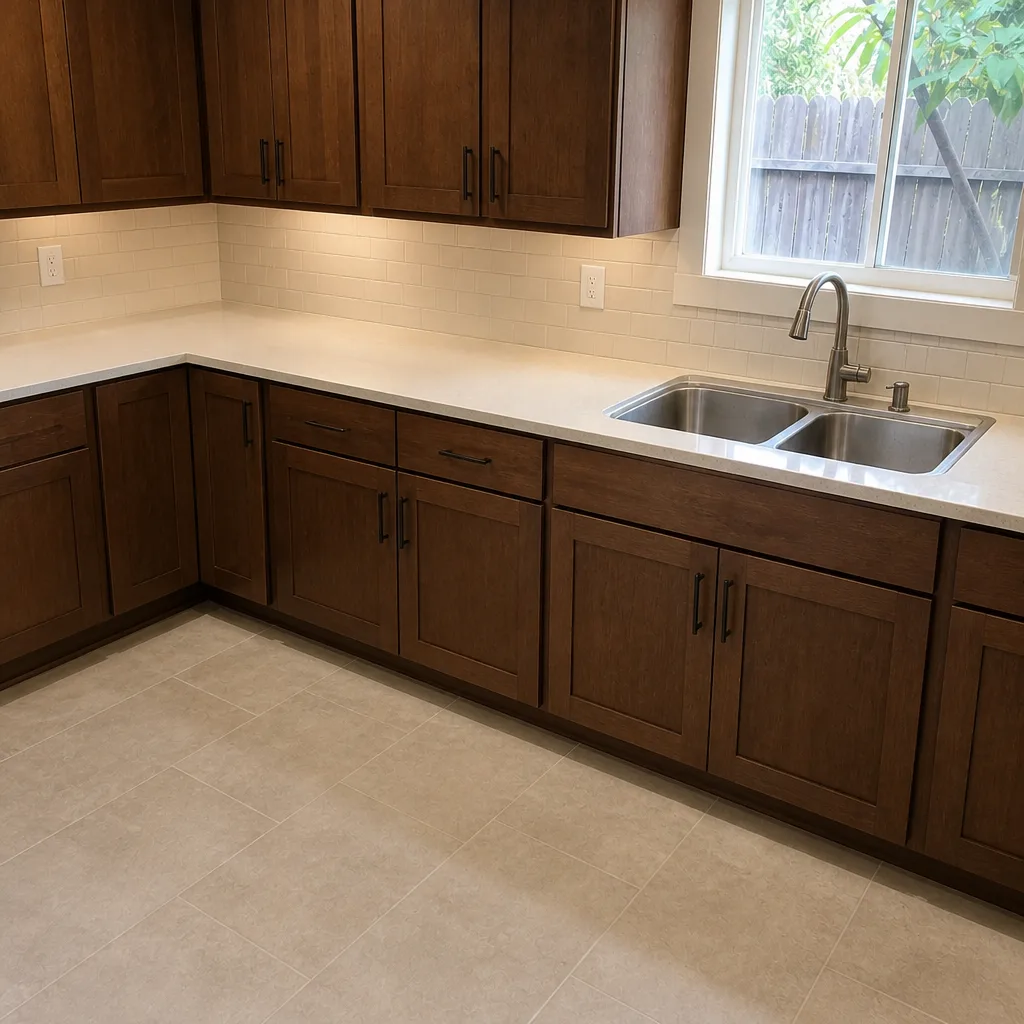
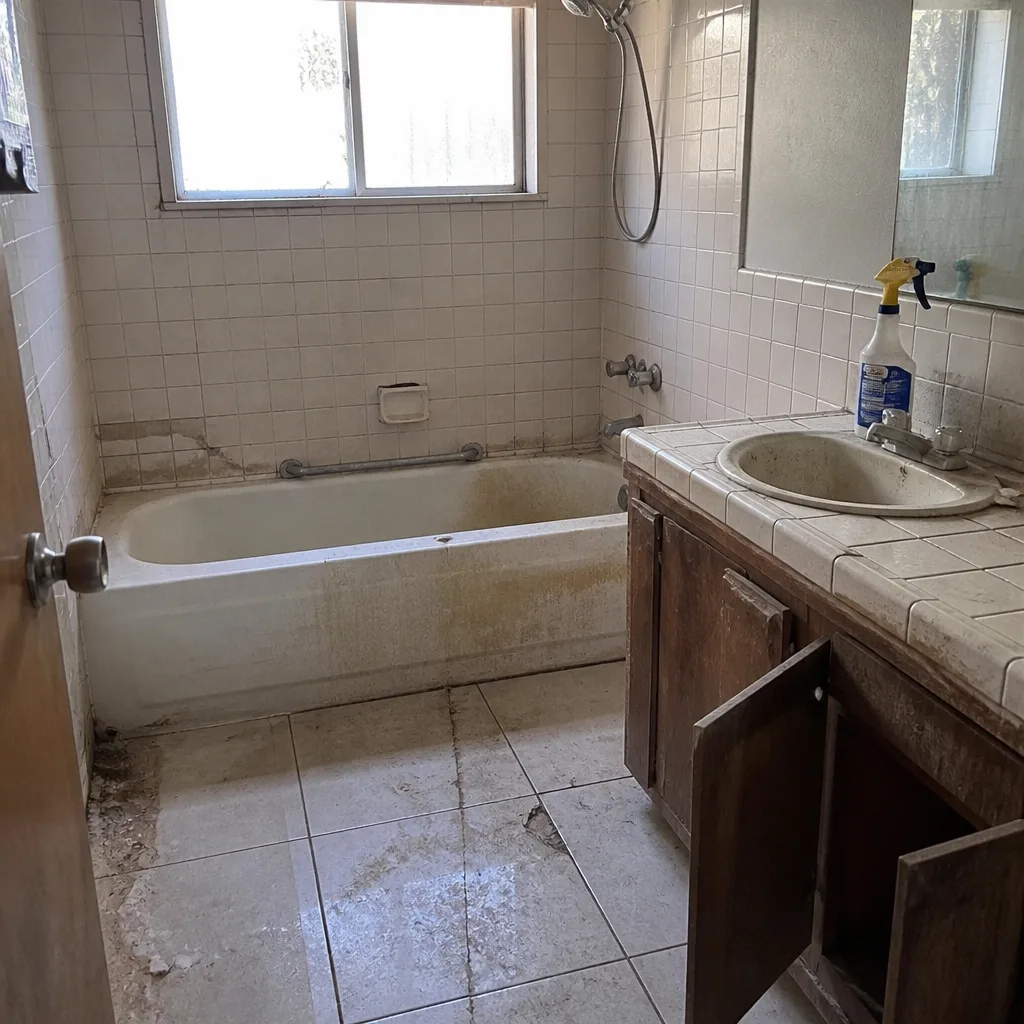
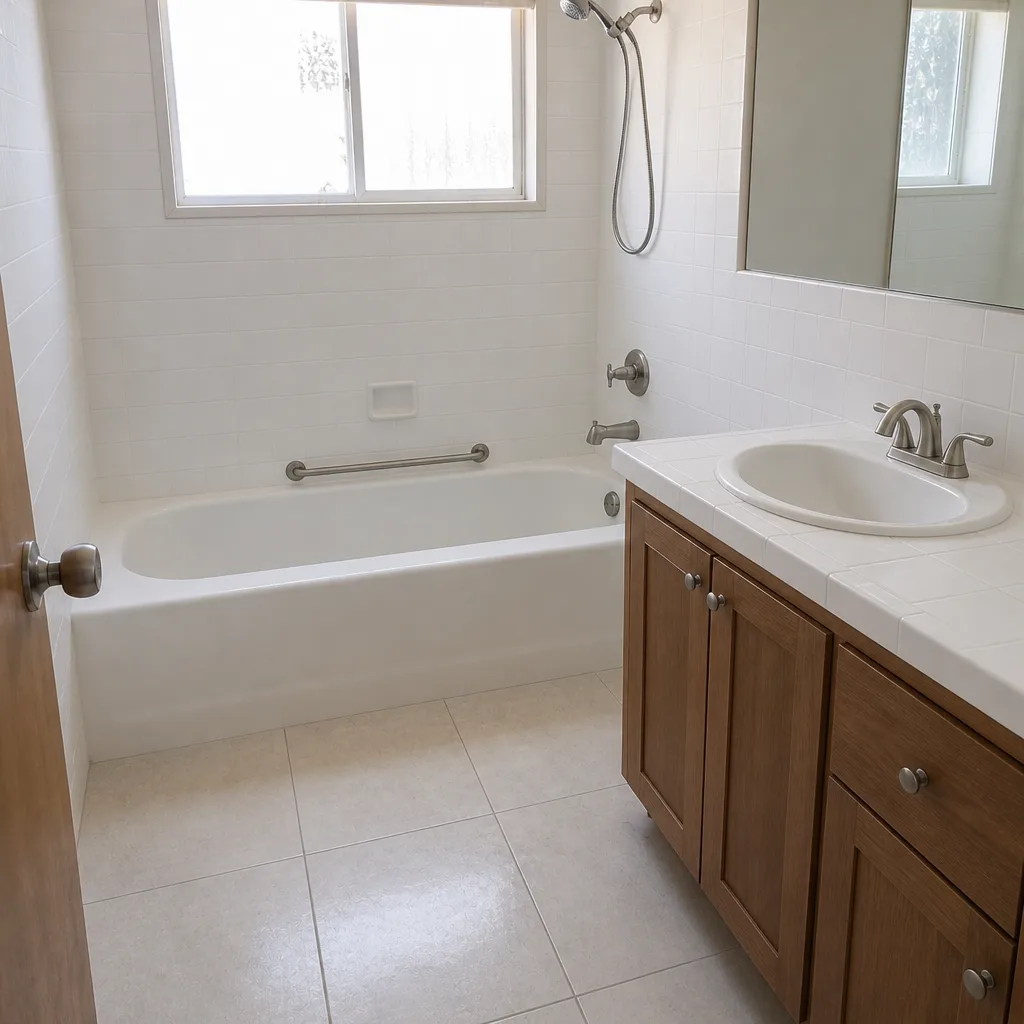
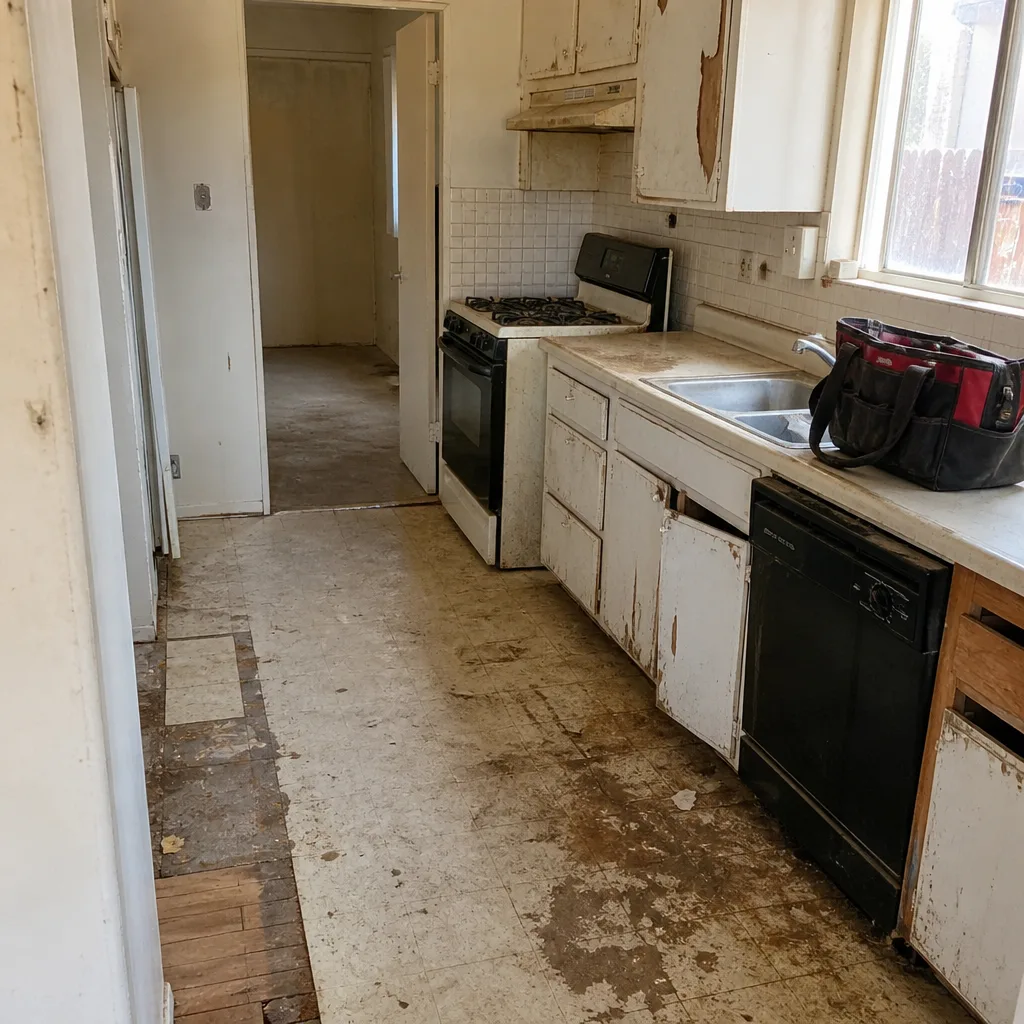
See the difference
 Before
 After
 Before
 After
 Before
 After
Warning Signs During a Renovation
Some of the most important warning signs appear not before a project starts but during it. If you’re hiring a contractor for a renovation in Elk Grove, watch for these signals that something is off in how the project is being run. They’re not about the finished look, which you can’t judge until the end. They’re about the process.
- The scope keeps changing in conversation but not on paper: every conversation about a change should end with a written line item. Verbal add-ons become disputes.
- Material is arriving without a brand or spec stated: you should know which cabinetry line, which countertop, and which fixtures are being installed before demolition starts. Products installed without a documented name are mystery products, and comparing them later is impossible.
- Substrate conditions are discovered and skipped over: if a contractor opens a wall, finds something unexpected, and moves on without showing you, ask to see it. This is where the costly problems hide.
- No one coordinates the trades: a renovation touches plumbing, electrical, tile, cabinetry, and paint. If each trade is a separate relationship you’re managing, the room can still be finished, but nobody owns the schedule.
- The estimate is a single number with no line items: a written line-item estimate is what allows you to compare bids honestly and to know what happens to the price if a change comes up.
- Unclear responsibility for permits: in California, most structural and permitting work requires a permit and inspections. If it’s unclear who’s pulling permits, that’s worth resolving before demo.
The reason we cover the full interior stack in-house, from cabinetry and countertops through flooring and paint, is precisely so that the coordination problem doesn’t land on the homeowner. One contractor, every phase. If a project involves an ADU or prefab structure alongside traditional work, that coordination matters even more, because the interfaces between the two are where handoffs typically go wrong.
Call Now vs. Monitor for a Season
The hardest judgment in construction is not “is this a problem?” It’s “how soon?” Here’s how to separate the two. As a rule of thumb, anything that shows active change over weeks belongs in the call now column. Anything that hasn’t changed in six months is a monitor item.
Call a professional this week when you see:
- Horizontal cracks in a foundation or stem wall, in any location, at any width.
- A diagonal crack that has grown measurably in three months, or one that has returned after patching.
- Water stains that appear in a ceiling or upper wall, especially after a storm.
- A door or window that will not close or latch at all, when it closed fine six months ago.
- A soft, spreading spot in a floor that has grown beyond its original footprint.
- Grout or tile cracks that have widened to the point that the tile has lost its bond. Hollow tiles in a traffic path get worse and can be a trip hazard.
Monitor for a season, but keep notes, when you see:
- Hairline cracks that haven’t changed since you first noticed them.
- A single sticking door that improves in a different season.
- Fading paint on one elevation with no bubbling or peeling.
- A single failed caulk joint that has no water staining associated with it.
- Paver settlement of an inch or so in one area with no water pooling nearby.
The monitoring approach works because seasonal movement reverses and settlement doesn’t. Give it a full year if you can, and take dated photos along the way. That record will make a professional inspection more useful when you decide to schedule one.
Common Mistakes to Avoid
- Treating every crack as structural, or every crack as cosmetic. Both are wrong. Read the direction, the width, and the change over time, not the existence of a crack.
- Patching a crack before you’ve dated it. Once patched, you can’t tell whether the movement that caused it is still happening. Photograph and date first.
- Blaming the clay for everything. Clay-soil movement is real in Elk Grove, but it’s also the convenient answer that can disguise a genuine settlement or a drainage problem. Rule out drainage first.
- Skipping the exterior walk. Many interior warning signs have an exterior source that’s cheaper to fix than the interior symptom.
- Paying for a substrate inspection after the finish material is installed. Inspect before the cabinets and tile go in, not after.
- Accepting a verbal change order during a renovation. Every change should be a written line item, including the responsibility for permits and the effect on schedule.
- Waiting through rainy season to check water intrusion. Walk the house after the first significant storm, then again near the end of the wet season. The signs are only visible when the water is moving.
When to Call a Professional
If any sign in the call-now list above applies, or if a monitor item has changed over time, it’s worth having a trained eye on the house. That’s true whether you’re planning a renovation or simply trying to decide whether to fix something. Our technicians have up to 14 years of experience reading the specific symptoms that show up in Elk Grove’s slab-on-grade homes on clay soils, and we can tell you what we see before any work is discussed. Elk Grove Remodeling offers free estimates in Elk Grove. Call (279) 333-1458. We answer 24/7. Fast dispatch from 7am to 7pm, Sunday through Friday. A call outside dispatch hours is booked into the next opening, Sunday through Friday, 7am to 7pm.
Frequently Asked Questions
No. A diagonal crack above a doorframe can be cosmetic, especially if it’s hairline and hasn’t changed size in months. What makes it worth professional attention is growth over time, alignment with a foundation edge, or the same crack recurring after patch repair. Date the crack and photograph it every three months to see which category it belongs to. Call (279) 333-1458 to schedule a free estimate if the crack is active.
Clay-soil movement reverses with the seasons; real settlement progresses in one direction. Track one sticking door or one crack for a year. If it frees up after rain and stiffens in the dry season, you’re likely seeing seasonal clay movement. If it gets worse steadily and concentrates on one side of the house, that’s a settlement signal. A professional inspection can settle the question when you’d rather know now. Call (279) 333-1458 for a free estimate.
Three months of dated photos are usually enough to tell whether a crack or a door problem is active. A full year tells you the seasonal pattern. If the sign is on the call-now list, don’t wait either interval. Schedule the inspection now and let the professional confirm. Call (279) 333-1458 to book a free estimate.
It shouldn’t. A written line-item estimate should be the basis for any work, and any change should come to you on paper before it happens, never as a surprise at the end. That’s true for a small repair and for a larger remodel. If a contractor won’t put the scope in writing, that’s your warning sign about the contractor. Call (279) 333-1458 for a free written estimate.
Most cities require a permit for structural repair work, and foundation work almost always falls under that. The precise threshold depends on scope and the local building department, so ask before work starts. We’ll walk you through what typically requires a permit and pull what’s needed on any job we do. Call (279) 333-1458 to talk it through and get a free estimate.
Yes, and that’s often the efficient path. If you’re already planning a kitchen or bathroom project and you’ve noticed substrate or plumbing warning signs, addressing them before new material goes in avoids tearing out new work later. We cover kitchens, bathrooms, flooring, and interior and exterior painting as a single project so the sequencing holds together. Call (279) 333-1458 for a free estimate and we’ll map out what should happen first.
The Bottom Line
Warning signs aren’t a checklist you run through once; they’re a record you build over time. The single most useful habit is dated documentation: photos of the same crack on a schedule, notes on the same door each season. That record tells you whether the issue is clay-soil seasonal movement, which reverses, or settlement, which doesn’t. Reserve the call-now response for horizontal foundation cracks, active growth, water intrusion, and spreading soft spots. For everything else, monitor, photograph, and let the pattern reveal itself. Our technicians have up to 14 years of experience reading Elk Grove’s specific conditions, and if you want a trained opinion sooner, we’re glad to help.
Call (279) 333-1458 for a free estimate. We answer 24/7. Fast dispatch from 7am to 7pm, Sunday through Friday.
Written by the team at Elk Grove Remodeling.