
Last updated November 25, 2026






Free written scope consultation - allowances, timeline, and change-order rules on paper before a single trade is scheduled
How to Hire a Construction Contractor in Elk Grove: A Step-by-Step Guide
Most homeowners start the contractor search by asking about price. The better first question is a different one: is this contractor built to run your whole project, or are they a single-trade specialist who’ll line up four separate subs who’ve never worked on the same floor plan? The left hand not knowing what the right hand is doing is the failure we hear about most, and it almost never shows up in the bid. This guide walks through license classifications, how to read a subcontractor list, what a real scope-of-work document looks like, and the red flags that matter specifically in Elk Grove. By the end you’ll know what to ask and what to look for.
Quick Answer
To hire a construction contractor in Elk Grove, verify their California license and classification on the CSLB website, ask for a written scope of work with material specifications and specific brand names, and check whether they carry an integrated crew or plan to assemble strangers for your remodel from unrelated subs. A legitimately equipped full-scope remodeler will provide all of this before you sign anything, and the price they quote should be fixed by the written estimate, not adjusted later through change orders.
Styles & brands we work with
- Kitchen remodeling
- Bathroom remodeling
- Home additions & ADU
- Roofing
- Windows & doors
- Driveway & pavers
- Fence
Table of Contents
- What License Classifications Matter for a Full Remodel
- How to Read a Contractor’s Subcontractor List
- What a Real Scope of Work Should Include
- Questions That Reveal Material Knowledge
- Red Flags Specific to the Elk Grove Market
- How to Vet a Timeline Before You Sign
- The Step-by-Step Hiring Process
- Common Mistakes to Avoid
What License Classifications Matter for a Full Remodel
The California State License Board (CSLB) issues different license classifications, and the classification on a contractor’s license tells you what type of work they’re legally authorized to perform. For a residential remodel that touches structure, plumbing, electrical, and finishes, this matters more than most homeowners realize. A contractor licensed only in one specialty trade isn’t authorized to contract for the whole job.
The classifications you’ll encounter most on a full-scope residential remodel include:
- Class A (General Engineering Contractor): Authorizes fixed works like roads, dams and sewers. Rarely relevant to a home interior remodel, though some site work may fall here.
- Class B (General Building Contractor): Authorizes construction of structures that require the use of more than two unrelated building trades. This is the classification you want for a whole-home or multi-trade remodel, and the one that matters most when the project spans framing, mechanical, electrical, plumbing and finish work.
- Class C (Specialty Contractor): Narrower scope. The relevant C-classes for a remodel include C-10 (Electrical), C-36 (Plumbing), C-20 (HVAC), C-33 (Painting and Decorating), C-15 (Flooring and Floor Covering), and C-54 (Tile, which covers ceramic and mosaic work). A C-33 painting specialist can handle your paint; they can’t contract for your kitchen.
Verify a contractor’s classification directly on the CSLB license lookup before any conversation about scope or price. The license should show the class and its current status. If a contractor is proposing to run your entire Elk Grove remodel but carries only a specialty C-class, that’s a real problem, not a technicality. A licensed, properly classified contractor will also be insured and bonded as the state requires, and the certificate should be mailed to you directly from the insurer, not handed over as a photocopy.
How to Read a Contractor’s Subcontractor List
Every general contractor uses subcontractors. That’s normal. The question that separates an integrated operation from an assembler is whether the subs already work together on a consistent basis, or whether the GC is pulling names from a list to match your job. In our experience, that distinction shows up in the finished product.
Ask for the sub list and ask two follow-up questions:
- “Who do you use for electrical, plumbing, and drywall?” Listen for specific licensed outfits, not “we’ve got a guy.” Independent local pros are licensed and insured as the state requires, and their licenses are verifiable on the CSLB site.
- “How many projects have these crews done together?” This is the real tell. A plumber who’s worked the same GC’s kitchens many times knows where the rough-in lands relative to the cabinet run. A stranger doesn’t.
If a kitchen remodel’s sub list includes an electrician, a plumber, a cabinet installer, a countertop fabricator, and a painter, and none of them are on the GC’s own bench, you’re the project manager whether you agreed to be or not. You’ll be the one fielding calls about the cabinet templating slipping a day and bumping the countertop install. An integrated operation handles that sequencing internally. That’s the difference between one contractor across every phase and six contracts disguised as one.
When you’re planning that kind of project, the same integration matters on our kitchen remodeling work – cabinet install, countertop templating and finish paint need to be sequenced by the same team, not handed between vendors.
What a Real Scope of Work Should Include
A proper scope of work is not a one-page outline. It’s a document that lists every task in the project, the material for each task, and the party responsible. Vague proposals are the single biggest source of dispute because they leave the specifics to imagination. The written scope and the written estimate together set the final price.
For a kitchen or bathroom remodel, the scope should itemize at minimum:
- Demolition: exact walls, floors and fixtures to be removed, and disposal responsibility.
- Rough-in work: electrical, plumbing and HVAC modifications with specified locations. “Relocate outlet per plan” is specific. “Upgrade electrical” is not.
- Framing changes, if any, with dimensions.
- Cabinetry: brand, line, color, and whether hardware is included. Naming the brand matters – KraftMaid and Wellborn both publish warranty and specification documents you can verify against the install.
- Countertops: material brand (Cambria, Silestone, Caesarstone), slab selection allowance, edge profile, and fabrication template date.
- Plumbing fixtures: brand and model for faucet, sink, toilet, shower trim. Kohler, Grohe, Toto and similar brands have specific rough-in requirements – model numbers protect you.
- Tile: material, layout, grout, and whether a waterproofing membrane is included in the shower.
- Paint: number of coats, brand, sheen, and which surfaces are included.
- Final clean and punch list: what’s covered and how disputes over finish quality get resolved.
Any line missing a material specification is a line that can be filled with the cheapest product the distributor has on hand. That’s not a fair outcome, and it’s the reason specifications matter. The scope and estimate together should state a fixed price with no change orders unless you sign off on a written change order. Ask about that clause in advance.
Questions That Reveal Material Knowledge
Anyone can name-drop a brand. The follow-up question separates a contractor who actually understands the product from one who’s marking up whatever’s in the distributor’s warehouse. Ask three specific questions and listen for specific answers:
- “Why this cabinet line for this kitchen?” A knowledgeable contractor will compare box construction, drawer glide rating, door style availability and finish warranty. KraftMaid and Wellborn both have published differences – a good answer identifies at least one.
- “What’s the difference between Cambria, Silestone and Caesarstone in this application?” All three are engineered quartz. The differences that matter are slab availability in your color, edge fabrication options, and warranty terms. A contractor recommending one should know why.
- “If I want to move up a tier on the fixtures, what changes?” The answer should describe real material and functional differences between, say, a Kohler and a Grohe trim, not just a dollar amount.
We work with a broad portfolio of industry brands across each category because the right product for a project depends on the project. Some rooms call for premium Cambria quartz and Grohe fixtures; others call for practical, well-made stock cabinetry and standard plumbing. Knowing both ends of that spectrum – and being able to explain the difference in plain terms – is the difference between a contractor who’s guiding you through material choices and one who’s just passing a catalog your way.
That material fluency carries into bathroom remodeling too, where fixture rough-in dimensions, waterproofing, and tile specification have to line up on paper before a single tile is set.
Red Flags Specific to the Elk Grove Market
Elk Grove’s newer housing stock – much of it built in the last couple decades – means a lot of remodels are working with materials and construction methods that differ from older Bay Area homes. A contractor who’s only worked pre-1980 housing may not appreciate what they’ll find behind a wall in a twenty-year-old Elk Grove build. Beyond that general fit, watch for these:
- Out-of-area contractors chasing post-storm work. After a significant storm, contractors from well outside the region sometimes canvass Elk Grove neighborhoods. Ask for their physical business address and verify the CSLB license address matches. A contractor who can’t answer where they operate from is a contractor who won’t be around for a warranty call.
- Bids with no material specifications. A bid that says “install new cabinets and countertops” without naming the cabinet brand, line and countertop material is a bid you cannot compare to another bid. Apples to apples is only possible with specifications.
- Verbal-only timelines. Any schedule that isn’t written into the contract isn’t a schedule. Ask for a start date, a sequence of milestones, and a completion window in writing. If it’s missing, don’t count on it.
- Large deposits before material ordering. A reasonable deposit tied to ordering specific materials is normal. A large cash deposit before any material order is not. Ask for a written payment schedule tied to milestones.
- “We don’t need permits for that.” Most structural, electrical, plumbing, and mechanical work in Elk Grove requires a permit from the City of Elk Grove. A contractor who routinely skips permits is one whose work may fail inspection when you sell and whose warranty isn’t worth much if a code issue surfaces later.
How to Vet a Timeline Before You Sign
Timelines blow up for three reasons: material lead times, trade sequencing, and scope uncertainty. A contractor who’s honest about all three will give you a schedule that holds. Ask for the schedule in writing and walk through it:
- Material lead times. Cabinet manufacturers can run several weeks on custom lines. Countertops need to be templated after cabinets are installed, then fabricated. A realistic schedule reflects both.
- Trade sequence. Demolition, rough framing, rough electrical and plumbing, insulation and drywall, priming, cabinet install, countertop template, countertop install, tile, fixture trim, paint, punch list. Every step touches the next – the countertop template doesn’t follow cabinet install by accident.
- Inspection windows. Elk Grove permits typically require inspections at rough-in and final stages. Factor that into the schedule. A contractor who claims the inspection is a formality hasn’t been through a failed one.
- Buffer. A timeline without slack is either dishonest or optimistic. Ask for the buffer and what causes it to be used.
A verbal promise of “three to four weeks” for a full kitchen isn’t a schedule – it’s a wish. Get dates and milestones in the contract.
The Step-by-Step Hiring Process
This is the sequence we recommend for any Elk Grove homeowner evaluating a construction contractor for a full residential remodel. It takes longer than one weekend, and it’s worth it.
- Verify the license and classification on the CSLB site. Confirm Class B for anything that spans trades, and confirm the license status is current and clear.
- Confirm insurance and bond certificates are sent to you directly from the insurer. Not a photocopy handed over in person.
- Request a written scope of work with material specifications. Brand, line, and model wherever relevant. If the proposal is a paragraph, walk away.
- Request a written estimate with a fixed price and a change-order clause. The written estimate sets the price. Understand in advance how changes are handled.
- Ask for the subcontractor list and how many projects those crews have done together. Integrated teams beat assembled ones.
- Ask about permits. Which permits will be pulled, who pulls them, and how inspections are scheduled.
- Get a written schedule with milestones. Material lead times, trade sequence, inspection windows, buffer.
- Get the payment schedule in writing, tied to milestones. Deposits should correspond to material orders and completed phases, not the signing date alone.
- Ask about the warranty in writing. Workmanship warranty terms and manufacturer warranty terms for the products specified.
That’s nine conversations, mostly email. A smooth-running contractor answers all nine cleanly. A contractor who bristles at the questions is telling you something.
If the project is broader than one room, the same sequence applies to a full home remodeling scope. The more trades involved, the more the integration questions matter.
Common Mistakes to Avoid
- Choosing the lowest bid without reading the specs. The lowest bid almost always has fewer line items or cheaper materials. Two bids only compare if the scope and specifications match.
- Accepting a verbal timeline. A timeline that isn’t in the contract isn’t a timeline. You’ll have no recourse if the schedule slips, and it will.
- Skipping the CSLB license check. A friendly contractor with a business card and a stack of references is not the same as a licensed contractor. The CSLB lookup takes two minutes.
- Letting a contractor talk you out of permits. Elk Grove requires permits for most structural, electrical, plumbing and mechanical changes. Unpermitted work can surface years later at sale or insurance renewal, and it’s your problem then, not theirs.
- Ignoring the subcontractor question. When the cabinet installer, the countertop fabricator and the plumber have never worked together, the coordination lands on you. That’s the most common reason Elk Grove homeowners report frustration after a remodel, and it’s preventable.
- Signing a proposal with no material brand line items. “New countertops” can mean engineered quartz or laminate. A brand line, like Cambria, Silestone or Caesarstone, locks in the specification.
- Paying a large deposit before material ordering. A reasonable deposit tied to ordering specific materials is normal. A large deposit with no material order attached is a red flag.
See the difference
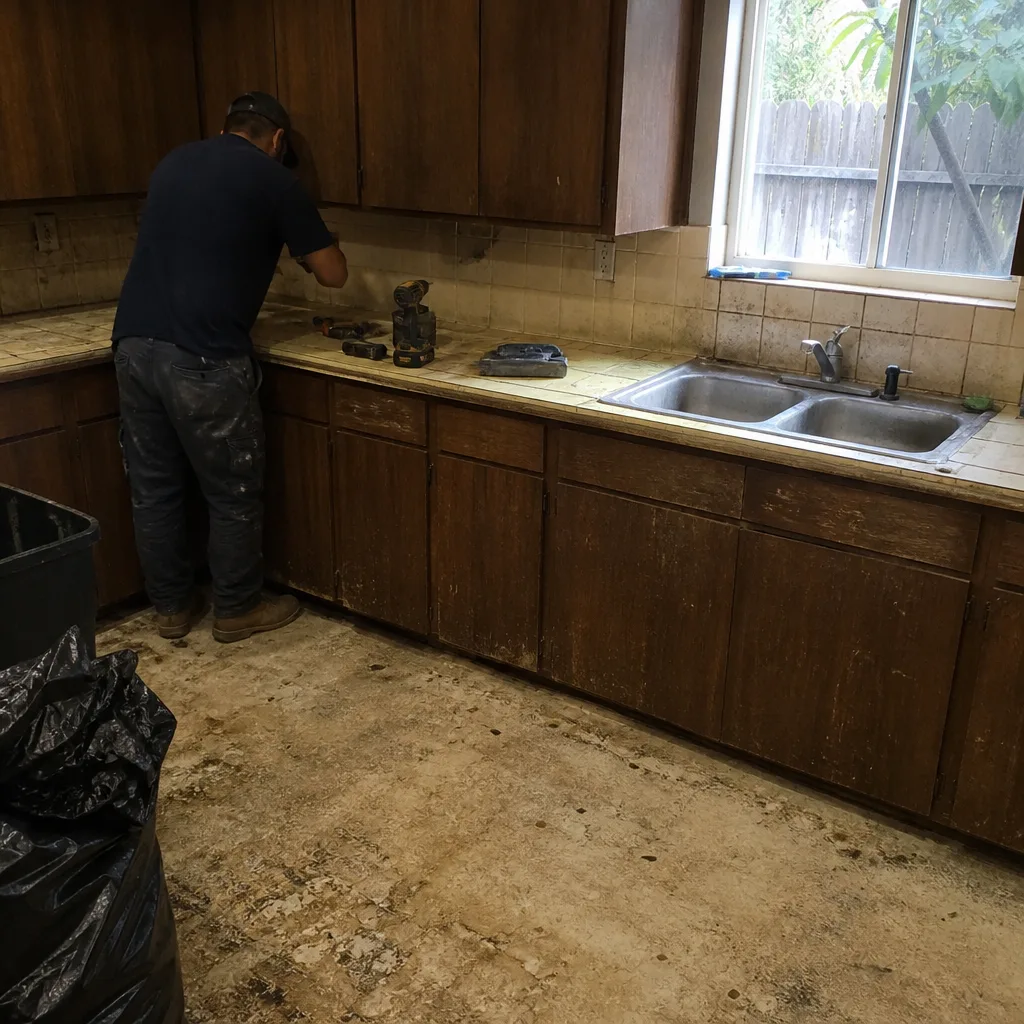 Before
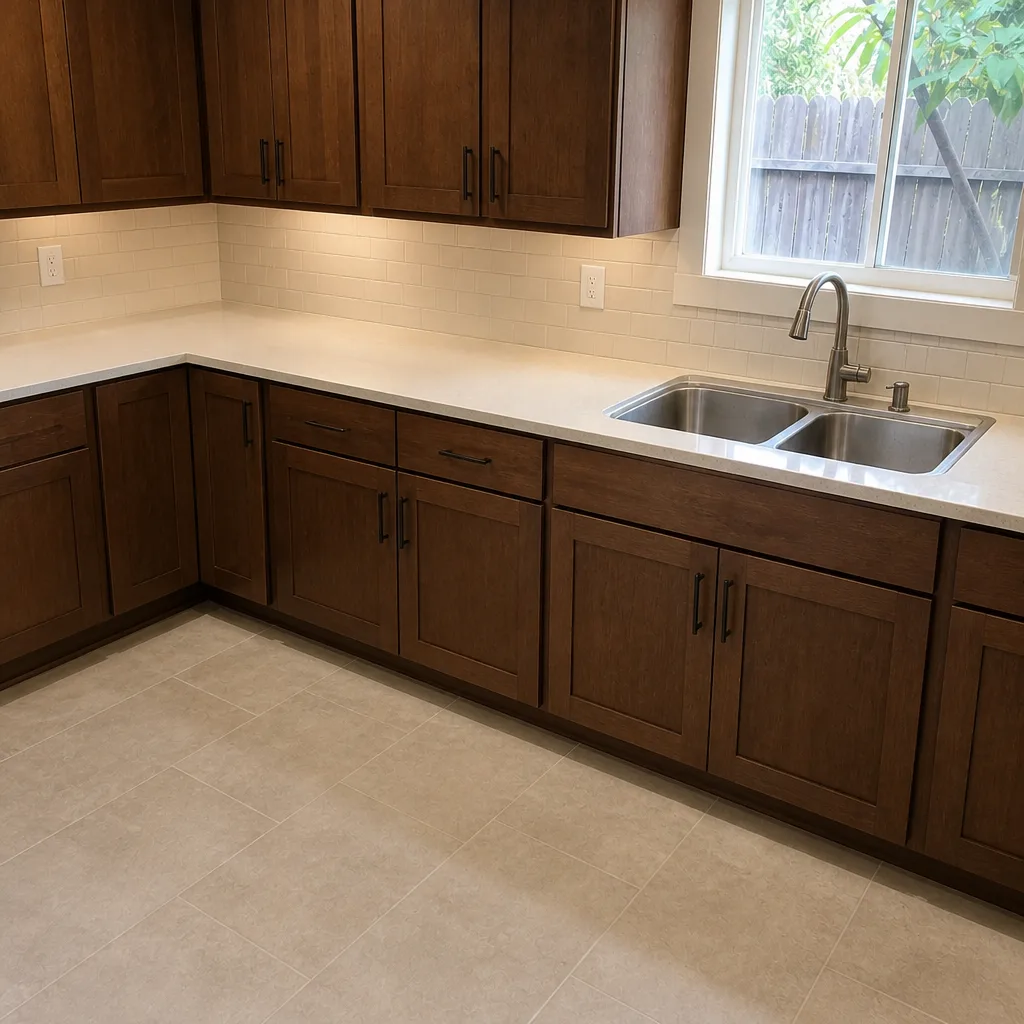 After
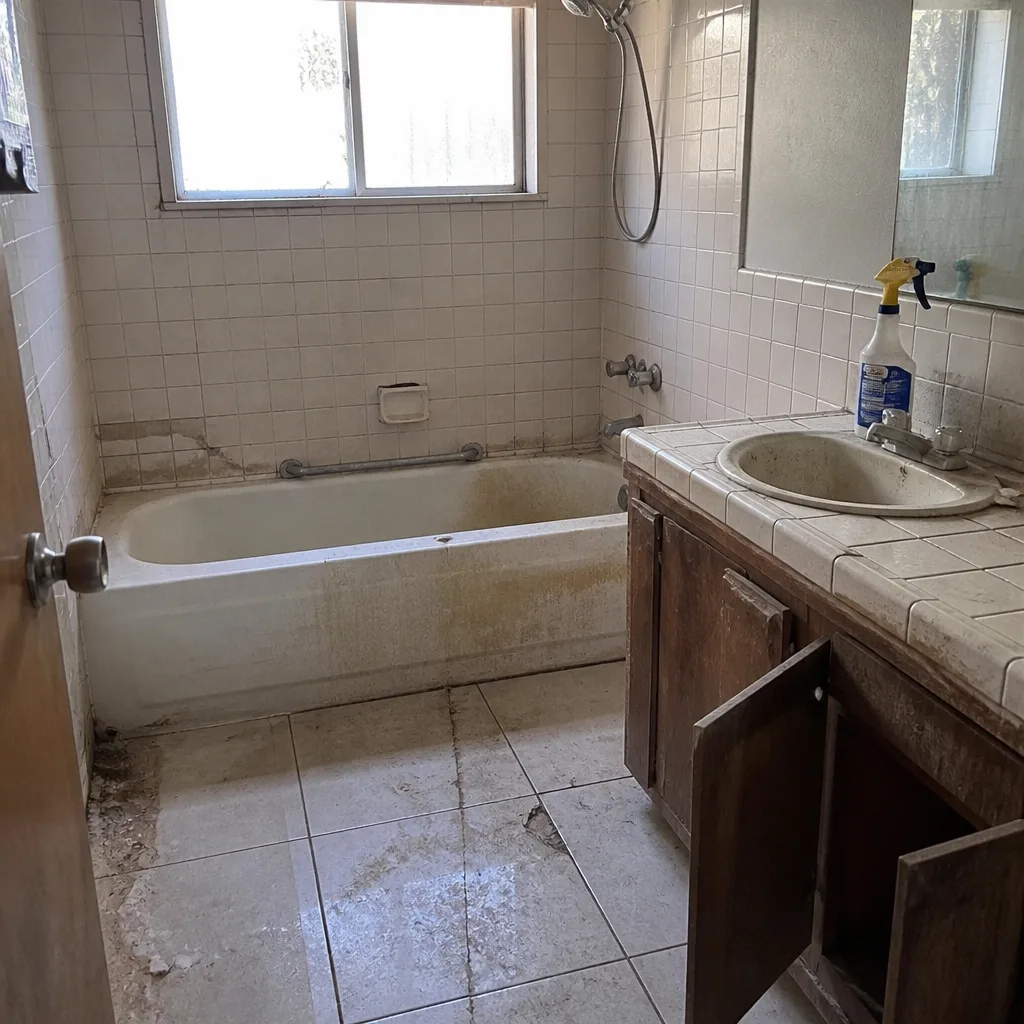 Before
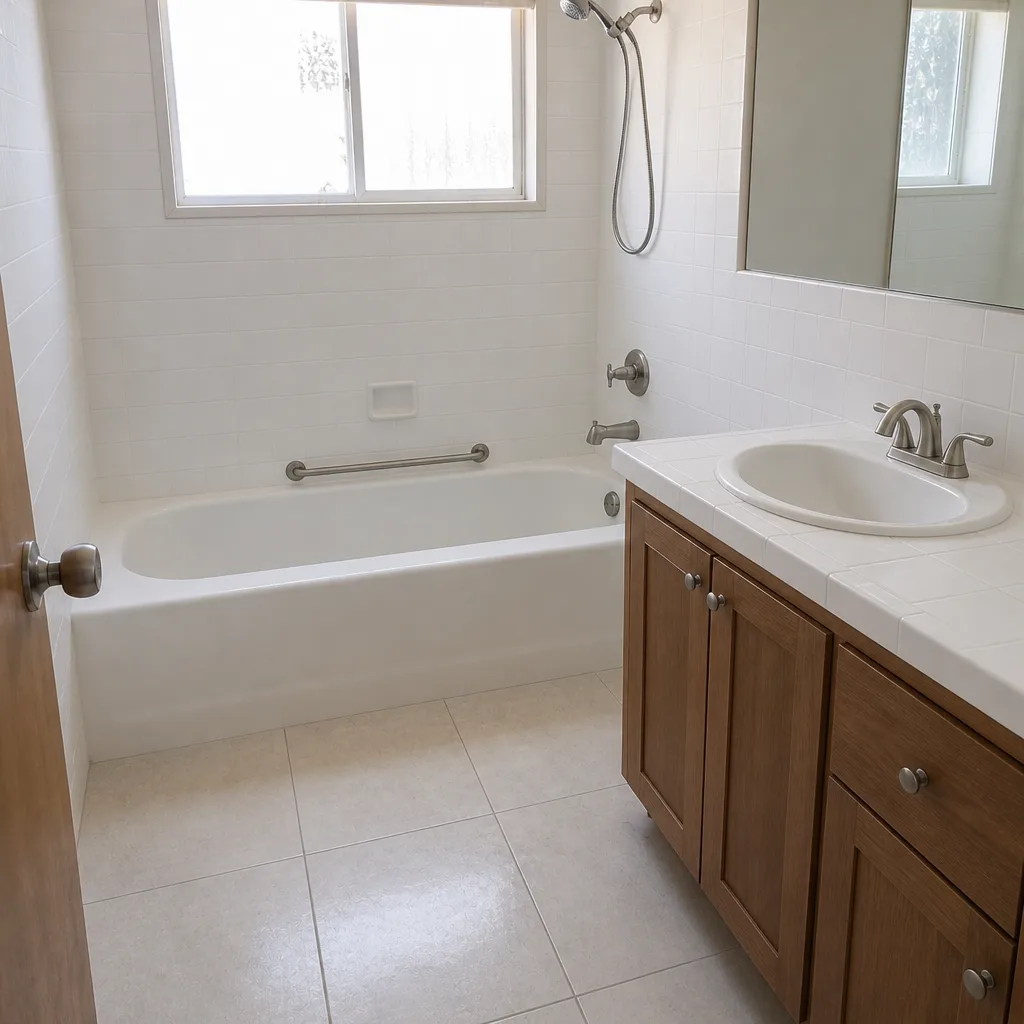 After
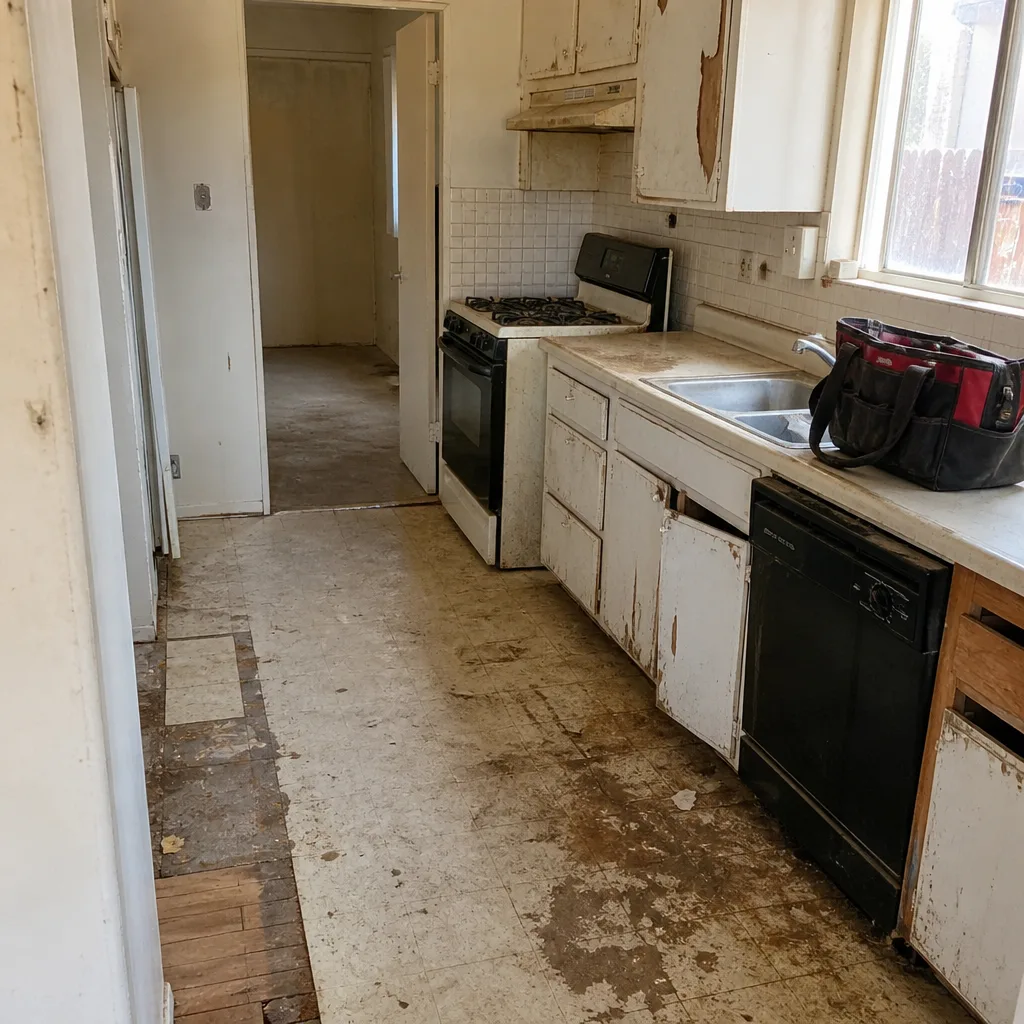 Before
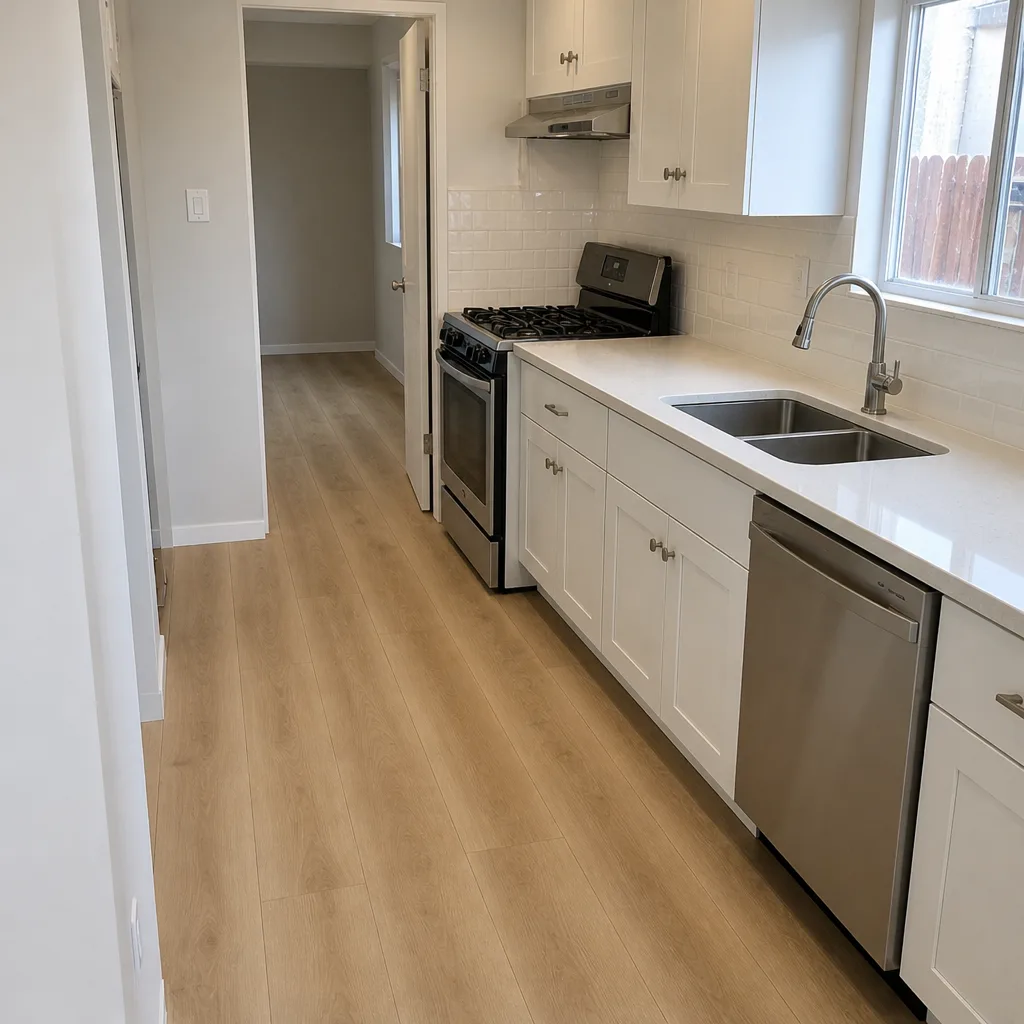 After
When to Call a Professional
Some remodel questions are worth asking a contractor even before you’re ready to commit. If you’re weighing two countertop materials and need to understand fabrication timelines, that’s worth a call. If you’re not sure whether a wall is load-bearing, that absolutely requires a professional to evaluate in person – never assume, never demo into a structural wall. If you’re considering an ADU on your Elk Grove property, the permit and utility work belong to a licensed contractor, not a handyman. Electrical panel work, gas line modifications, and any structural change fall into the same category: trained, licensed professional, no exceptions. Those components can injure or kill if handled incorrectly, and no online guide substitutes for a licensed trade evaluating the specific install.
Elk Grove Remodeling offers free estimates in Elk Grove and a written line-item scope with material specifications up front. Call (279) 333-1458. We answer 24/7. Fast dispatch from 7am to 7pm, Sunday through Friday.
Frequently Asked Questions

You need a contractor holding a Class B (General Building Contractor) license from the CSLB, since a full residential remodel spans more than two unrelated trades. A Class C specialty contractor can handle one trade within the project but isn’t authorized to contract for the whole thing. Verify the classification on the CSLB website before you sign anything. For a project that touches multiple rooms, call (279) 333-1458 and we’ll walk through the scope – estimates are free.
Ask for the subcontractor list and then ask how many projects those specific crews have completed together. Every GC uses subs, but an integrated operation uses the same vetted trades on most projects, while an assembler pulls names per job. The difference shows up in trade sequencing and finish quality. If the answer is vague, that tells you what you need to know. Call (279) 333-1458 to talk through how we sequence a full remodel.
A proper kitchen scope itemizes demolition, rough electrical, plumbing and HVAC, framing changes, cabinetry with brand and line, countertops with material brand and edge profile, plumbing fixtures with model numbers, tile layout and waterproofing, paint specification, and final punch list. Any line without a material specification is a line that can be filled with the cheapest product on hand. Ask for brand names – KraftMaid, Wellborn, Cambria, Kohler – because they lock in the specification. Call (279) 333-1458 for a written scope and estimate – both are free.
Yes, in most cases. Bathroom remodels that relocate plumbing fixtures, add electrical, modify framing, or change mechanical systems typically require permits from the City of Elk Grove, and inspections at rough-in and final stages are part of the process. A contractor who routinely skips permits exposes you to inspection problems later at sale or insurance renewal. Ask for the permit plan in writing. Call (279) 333-1458 to discuss your project scope – estimates are free.
The written estimate sets the price, and a properly written contract should include a change-order clause so any adjustment requires your written approval first. Price changes come from two places: undiscovered conditions behind the wall, or scope changes you initiate. A contractor who regularly converts fixed-price estimates to open-ended change orders is a contractor to skip. Call (279) 333-1458 for a fixed-price written estimate – estimates are free.
Ask for their physical business address and cross-reference it with the address on their CSLB license. Out-of-area contractors who arrive after a storm often can’t answer warranty questions later, because they’re not around to honor them. Any contractor who can’t point to a verifiable local address and a current license is a pass. For a free estimate on legitimate local work, call (279) 333-1458.
The Bottom Line
Hiring a contractor in Elk Grove comes down to three things: a verified Class B license, a written scope of work with real material specifications, and an integrated crew rather than an assembled one. The rest – price, timeline, warranty – flows from those three. A contractor who can produce all three cleanly is one who’ll actually finish your project. A contractor who can’t is one who’ll hand the coordination off to you. Free estimates, written line-item quotes, fixed pricing, and permits pulled and inspected are the standard, not the exception. If a contractor won’t put those in writing, walk away. If they will, the project has a real chance of going well – and that’s worth more than saving a few thousand on a bid.
Ready to move from vetting to a real conversation? Call (279) 333-1458 for a free estimate. We answer 24/7. Fast dispatch from 7am to 7pm, Sunday through Friday. You can also start at Elk Grove Remodeling to understand the full scope of work we cover.
Written by the team at Elk Grove Remodeling.