Last updated November 25, 2026








Free written scope consultation - allowances, timeline, and change-order rules on paper before a single trade is scheduled
Home Remodeling Maintenance Checklist for Elk Grove Homeowners
The mistake most Elk Grove homeowners make is treating a remodel as finished the day the last walkthrough sign-off happens. It isn’t. What’s under your house – expansive clay that swells in wet winters and shrinks hard through our dry, 100°F summers – keeps moving long after the paint cures, and it works on grout lines, caulk joints and cabinet toe-kicks every single year. National maintenance checklists miss this because they’re written for places with different soil and different weather. This guide is built around what actually fails in Elk Grove homes, from a seasonal inspection rhythm to post-remodel milestones by material. Read it once now, then keep it as your yearly reference.
Quick Answer
A home remodeling maintenance checklist for Elk Grove should focus on four things: seasonal inspection of grout, caulk and flooring transitions to catch clay-soil movement before it spreads; water-related upkeep in kitchens and baths tied to the region’s hard water; ventilation and moisture checks in a climate that runs air conditioning five-plus months a year; and material-specific care milestones at the one-, three- and five-year marks that protect manufacturer warranty coverage. Do a full walkthrough each spring and fall and you’ll stay ahead of almost everything on this list.
Styles & brands we work with
- Kitchen remodeling
- Bathroom remodeling
- Home additions & ADU
- Roofing
- Windows & doors
- Driveway & pavers
- Fence
Table of Contents
- Why Elk Grove’s Soil Sets Your Maintenance Calendar
- The Two-Season Inspection Rhythm for Elk Grove Homes
- Kitchen and Bath Checks: Grout, Caulk and Hard Water
- Flooring Maintenance by Material: LVP, Hardwood and Tile
- Air Conditioning and Ventilation Checks That Protect Your Remodel
- The 1-Year, 3-Year and 5-Year Maintenance Milestones
- Exterior and Hardscape Checks That Feed Back Into the Interior
- Common Mistakes to Avoid
Why Elk Grove’s Soil Sets Your Maintenance Calendar
Elk Grove sits on expansive clay soils, and that single fact reshapes what maintenance means here. Clay swells when the winter rains come and shrinks as the ground dries through our long hot summers. That movement is small – fractions of an inch at the surface – but it happens across the whole footprint of most homes in neighborhoods like Laguna West, Stonelake and the older streets near Old Town. A slab or foundation that shifts even slightly pulls on everything attached to it.
Grout is often the first thing to show it. A hairline crack that appears along a bathroom floor or a kitchen backsplash each dry season isn’t usually a plumbing problem or a bad tile install – it’s the house flexing under the tile. Caulk lines at tubs, sinks and backsplashes stretch and separate the same way. Cabinet toe-kicks can pull away from the floor at the front edge where the box meets the slab. Flooring transitions between rooms – the thin strip or T-molding where tile meets wood or LVP – can lift or gap as the two surfaces move at different rates.
Here’s why this matters for maintenance specifically: none of those failures announce themselves. They start small and grow quietly across a couple of seasons, and by the time a homeowner notices a loose tile or a soft spot near a shower, the water has usually been getting in for a while.
A checklist tuned to Elk Grove’s soil cycle is really a checklist tuned to the two moments when movement slows down: late fall, after the ground has taken on its winter moisture, and late spring, after the shrink phase has done its work. Those are the two windows when a careful inspection catches the year’s changes. Check once and you see a photo; check twice a year and you see the trend. For homeowners planning a renovation, understanding this rhythm early is one reason it’s worth talking through your project with a team that knows home remodeling in this particular soil, not just in general.
We’ve seen this play out across enough Elk Grove houses to say it plainly: the specific address matters less than the age of the slab, the drainage around the perimeter and how the finish materials were installed. A tight tile job with a proper membrane over a well-drained slab will tolerate the movement far better than a quick-set installation on a poorly graded lot. If you’re mid-remodel or planning one, ask about crack isolation over slab before the tile goes down. It’s a boring detail with outsized payoff five summers later.
The Two-Season Inspection Rhythm for Elk Grove Homes
You don’t need a maintenance subscription to keep an Elk Grove home healthy. You need two careful walkthroughs a year, done in the right order, plus a short list of spot checks that take minutes each month. Here’s the rhythm we recommend to every homeowner we work with, whether or not we did the original remodel.
The Fall Walkthrough (after the rains return)
- Walk every room and look down. Scan grout lines in tile floors and backsplashes for new hairline cracks. Photograph anything new – you want a before-and-after record across seasons.
- Press every caulk joint at tubs, sinks and showers. Run a fingertip along the joint; any softness, separation or dark discoloration means it’s time to cut it out and re-seal.
- Check flooring transitions. Lift or press the T-molding and reducer strips where tile meets wood or LVP. A transition that rocks or shows daylight underneath needs re-fastening before a toe catches on it.
- Examine cabinet toe-kicks in kitchen and bath. Look for a gap opening between the cabinet box and the floor, especially at the front corners.
- Inspect exterior door and window seals. Feel for drafts at weatherstripping on entry doors – if a door assembly like a Therma-Tru unit is installed, the frame and threshold should still sit flush and seal cleanly.
The Spring Walkthrough (after the shrink phase)
- Repeat the grout and caulk scan. Compare against your fall photos. A crack that widened across the winter is a signal worth acting on.
- Check the perimeter drainage around your home. Confirm that winter rains drain away from the slab; soil that stays wet against the foundation is a slow-moving problem for interior finishes.
- Test the AC before the first hot stretch. Change filters, listen for unusual noise, and confirm condensate drains clear – more on that in the HVAC section.
- Inspect paint and exterior cladding. Look for peeling, cracking or chalking, particularly on south- and west-facing walls that take the hardest sun.
- Look at hardscape seams. Pavers, retaining walls and patio joints near the doors that feed into your kitchen move with the same soil. Loose joints in a Belgard or Unilock install are easier to re-sand and re-secure in spring than to reset after a hard summer.
Between the two big walkthroughs, the only real ongoing task is spotting. A monthly glance at the shower and tub caulk, and a quick look under the kitchen sink, catches most surprises before they turn into a repair. Write your highlights down – the trend across seasons tells you more than any single check.
Kitchen and Bath Checks: Grout, Caulk and Hard Water
The Sacramento region’s water runs hard, and if you’ve lived in Elk Grove a while you already know it. That mineral content is the second big driver of kitchen and bath maintenance after soil movement. Hard water leaves scale on fixtures and grout lines, dulls polished stone and accelerates the breakdown of caulk at wet joints. It’s a slow wear item, not a defect – but it needs to be managed.
The audit protocol we recommend runs quarterly in a kitchen or full bath, or monthly in a heavily used shower:
- Fixtures: Wipe down faucets and showerheads with a mild acidic cleaner to break scale before it etches. Kohler, Grohe and Toto finishes are durable, but mineral scale left to sit builds up under the finish and dulls it permanently.
- Grout: Look for uniform color across the whole field. Patches that darken and stay dark are holding moisture. A sealer re-application – typically once a year in showers, longer in dry areas – keeps water out of the grout body.
- Caulk at wet joints: Cut out and replace any caulk that has pulled away from a tub, sink or shower surround. Never caulk over old caulk. Use a silicone-rated caulk for wet joints and give it proper cure time.
- Countertop seams: If you have Cambria, Silestone or Caesarstone quartz, check the edge seams and backsplash caulk at the same time. Quartz surfaces themselves are non-porous and low-maintenance, but the sealants and seams around them aren’t.
- Cabinet boxes and toe-kicks: Look inside the cabinet under sinks for any sign of moisture. Water in a cabinet reveals itself fast – a swelling panel, a soft floor or dark staining on the box.
- Exhaust fan: Confirm it’s pulling air during showers. A weak bath fan in a humid bathroom in a climate that runs AC heavily is a recipe for paint failure and mold growth on the walls.
One of the biggest favors you can do for yourself during a bath or kitchen change is pick materials with maintenance reality in mind. We work with brands like KraftMaid and Wellborn for cabinetry, and top quartz surfaces across the board, because those choices give homeowners a clear picture of what upkeep actually looks like over the life of the room. If you’re planning this work, see our bathroom remodeling page for the material detail behind these recommendations.
If you’re not sure whether a particular crack or stain is normal wear or a sign of something deeper, that’s the moment to call a professional rather than patch over it. See our contact section at the end for how to reach us.
Flooring Maintenance by Material: LVP, Hardwood and Tile
Flooring gets the most wear of any finish in the house and the least maintenance attention. What a homeowner signed up for depends heavily on the material chosen, and in Elk Grove that material sits on a moving base. Here’s what to expect from each major category, matched to the local soil and climate reality.
Luxury Vinyl Plank (LVP)
LVP tolerates the seasonal movement far better than any hard material – it flexes rather than cracks. Its maintenance is mostly about cleanliness: sweep regularly, avoid standing water, and use a pH-neutral cleaner. The main things to watch are the transitions at room boundaries, which can lift if the soil shifts underneath, and any edges at a doorway or exterior threshold, where debris and moisture can collect. If you went with an LVP throughout a remodel, you’ve chosen one of the most forgiving flooring options available.
Hardwood
Hardwood is beautiful and finicky. It expands and contracts with humidity changes; the Sacramento valley’s swings between wet winter and dry summer push that harder than many climates. Maintenance means keeping indoor humidity reasonably stable, wiping up spills immediately, and buffing or refinishing at the intervals the manufacturer recommends. If you notice individual boards cupping (edges curling up) or gapping, that’s humidity movement, not damage to ignore.
Tile
Tile is the floor most affected by Elk Grove’s soil cycle. On a slab, the grout lines act as the fuse – they crack before the tile itself does. Small cracks are cosmetic and can be re-grouted; wider cracks that cross multiple tiles or radiate from a single point deserve a closer look. Crack isolation membrane or a proper uncoupling system between the slab and the tile is the durable answer, and it’s a detail worth asking about before any tile install. The maintenance side: yearly grout sealing in high-traffic zones, prompt repair of grout that’s lost chunked-out material, and a look at the transition at doorways, where tile meets another floor.
For any new flooring project, choosing the material is the first maintenance decision you make. We work with a wide range of manufacturer brands so homeowners can compare material performance against real preferences, and we’ll show you the options at each price point. If flooring is on your list, the detail work belongs in your renovation plan, not bolted on later. Our Elk Grove Remodeling team can walk you through the full stack of interior options in one conversation.
Air Conditioning and Ventilation Checks That Protect Your Remodel
Elk Grove runs air conditioning five-plus months a year, and the conditioning inside a remodeled home is doing structural work beyond comfort. Moisture, airflow and pressure connect directly to how long your paint, caulk and cabinetry last. Here are the remodel-adjacent HVAC checks that most national maintenance checklists skip.
- Filter changes: Change the filter on the manufacturer’s recommended schedule – often every couple of months during peak cooling. A clogged filter reduces airflow and puts stress on the system; a strained system means less humidity control inside the house.
- Condensate drain: Check that the AC condensate drain is clear before the first hot stretch. A plugged drain can back water into surfaces or walls – and the first thing a remodeled interior shows when water gets into a wall is peeling paint.
- Return air obstructions: After a remodel, confirm that new furniture, cabinetry or shelving doesn’t block a return grille. Blocked returns change pressure and can drive moisture into wall assemblies.
- Exhaust fan performance: Bath and kitchen exhaust fans need to be strong enough to clear moisture and heat. Confirm they’re pulling air; if the fan is weak or noisy, that’s a maintenance item, not an annoyance to live with.
- Interior humidity: In the dry summer, indoor humidity can be low enough to shrink wood trim and causes hairline gaps at joints. A simple hygrometer tells you what’s happening; keeping indoor humidity in a stable range protects paint, wood and cabinetry.
The intersection here is between climate and construction. A room that runs too damp, or swings hard between humid and dry, wears faster than it should – and the culprit is often an HVAC or exhaust issue, not a material failure. When we plan an interior remodel, we plan around the ventilation the home actually has. For a full picture of how ventilation fits into a project, our kitchen remodeling page covers the exhaust and airflow detail in a kitchen context.
The 1-Year, 3-Year and 5-Year Maintenance Milestones
Manufacturer warranties on installed materials don’t just cover the material – they often require you to maintain it. Ignoring maintenance milestones can void coverage on things like cabinet finishes, quartz surfaces, siding and windows. The good news: the milestones are predictable. Here’s the schedule we recommend to any Elk Grove homeowner who’s recently finished a remodel.
Milestone 1: The First Year
- Re-seal tile grout in bathrooms and kitchens once it’s had a full season to settle.
- Replace or top up caulk at wet joints if it shows any separation from the first winter’s worth of movement.
- Check paint at high-traffic walls and doorframes for scuffs and hairline cracking, and spot-touch before the damage grows.
- Document everything. Keep your written estimates, material specs and warranty paperwork together; note the brands installed – KraftMaid or Wellborn cabinetry, Cambria quartz counters, Kohler fixtures – so you know what coverage to reference.
Milestone 2: The Third Year
- Re-caulk the wet joints in every bathroom and the kitchen.
- Re-seal stone or quartz-edge sealants and check countertop seams.
- Inspect cabinet doors and drawer fronts for hardware loosening and finish wear; most cabinet brands specify re-tightening and cleaning products.
- Review your flooring transitions against your yearly inspection notes. Any transition that’s been moving isn’t going to stop.
Milestone 3: The Fifth Year
- Plan a full re-seal of grout and stone-friendly seals throughout the house.
- Look at a fresh coat of interior paint in the highest-traffic rooms – or more often if you’re in a room with strong sun. Our home remodeling page covers how paint fits into a wider refresh.
- Check exterior paint and cladding for wear, especially on James Hardie fiber cement siding, which lasts long but still benefits from a periodic inspection and repaint at the recommended interval.
- Reassess roof materials and gutters. If your roof uses GAF, CertainTeed or Owens Corning shingles, keep to the manufacturer’s inspection rhythm; Boral roofing products are typically durable but still need the same look.
Keep the schedule in writing wherever you keep household records. The 1-year, 3-year and 5-year markers also align well with a practical re-check of any project’s cost picture – call us for a fresh written estimate if you’re weighing a refresh at any of those intervals. Estimates are free.
Exterior and Hardscape Checks That Feed Back Into the Interior
You can’t maintain an interior remodel without watching the exterior. Water that gets in through a door, window or hardscape edge connects straight to the inside – and the maintenance you do outside is what keeps the checklist short inside.
Here’s what to inspect on an Elk Grove exterior, particularly if a home has recently been renovated:
- Entry doors and windows. Confirm weatherstripping and thresholds seal properly. On an installed Therma-Tru door, or a window package from a brand like Mr-Glass or ViewLux, the frame, sill and weatherstrip should sit clean and dry through a rainy season. Water stains at the threshold on the inside are a signal to investigate promptly.
- Exterior paint and siding. Sun exposure on the south and west walls is hard in the valley. Peeling or checking paint means the substrate is exposed to moisture and temperature swings; address it in the spring before the summer heat bakes it in place.
- Hardscape joints and drainage. Pavers and retaining walls move with the same soil as the slab. If you have a Belgard, Unilock or Techo-Bloc install, check joint sand and re-sand as needed and look for settling at the edges. Confirm the drainage away from the foundation is clean.
- Roof inspection at ground level. Look for lifted or worn shingles from a distance, especially after a heavy wind. Keep up with the manufacturer’s inspection intervals if you have GAF, CertainTeed, Owens Corning or Boral materials in place.
- Gutters and downspouts. Clean them before the wet season and confirm they discharge away from the house. This is one of the highest value maintenance tasks for an Elk Grove home because it protects the slab from staying too wet.
If your renovation plans extend beyond the interior – a patio, a driveway or an accessory dwelling unit – the same brands carry through. We work with hardscape and paving brands like Belgard, Unilock and Techo-Bloc as well as ADU and prefab systems like Abodu, Dvele, Boxabl, Plant Prefab and Tuff Shed, so exterior and interior projects can be coordinated rather than layered one on top of another. Staying on top of exterior maintenance is the cheapest protection your interior investment has.
Common Mistakes to Avoid
- Treating the walkthrough as the finish line. A remodel is finished when it’s installed, not when it’s maintained. The first year of ownership is when the seasonal movement and the first wet winter are both working on the house. Start the checklist then, not after you notice a problem.
- Grout and caulk shortcuts. A lot of homeowners caulk over existing old caulk or grout over a hairline crack without investigating. The joint needs to be cut out and the surface cleaned properly, or the new material fails within a season.
- Ignoring a hairline crack that’s new each season. In Elk Grove’s soil, a single hairline crack might be nothing. A crack that reappears and widens across several seasons is a signal to look at the base – not just re-caulk.
- Missing the HVAC connection. Homeowners skip filter changes and condensate drain checks, then wonder why paint or cabinet finishes fail in a home running AC five months a year. Ventilation and humidity control are part of the building’s maintenance, not just an appliance’s.
- Letting the exterior go because the interior looks good. A few loose shingles, clogged gutters or a leaking door threshold connect straight back to the interior walls and finish. The exterior is the front line for interior damage.
- Skipping the milestone schedule. Re-sealing grout, re-caulking wet joints and refreshing paint on time keeps both the finish and the manufacturer warranty in force. A missed milestone costs more than the maintenance itself.
- Doing a repair with zero documentation. Keep the paperwork. When a warranty question comes up, knowing the brand and the install date resolves it quickly. Without that record, the homeowner is the one absorbed the cost.
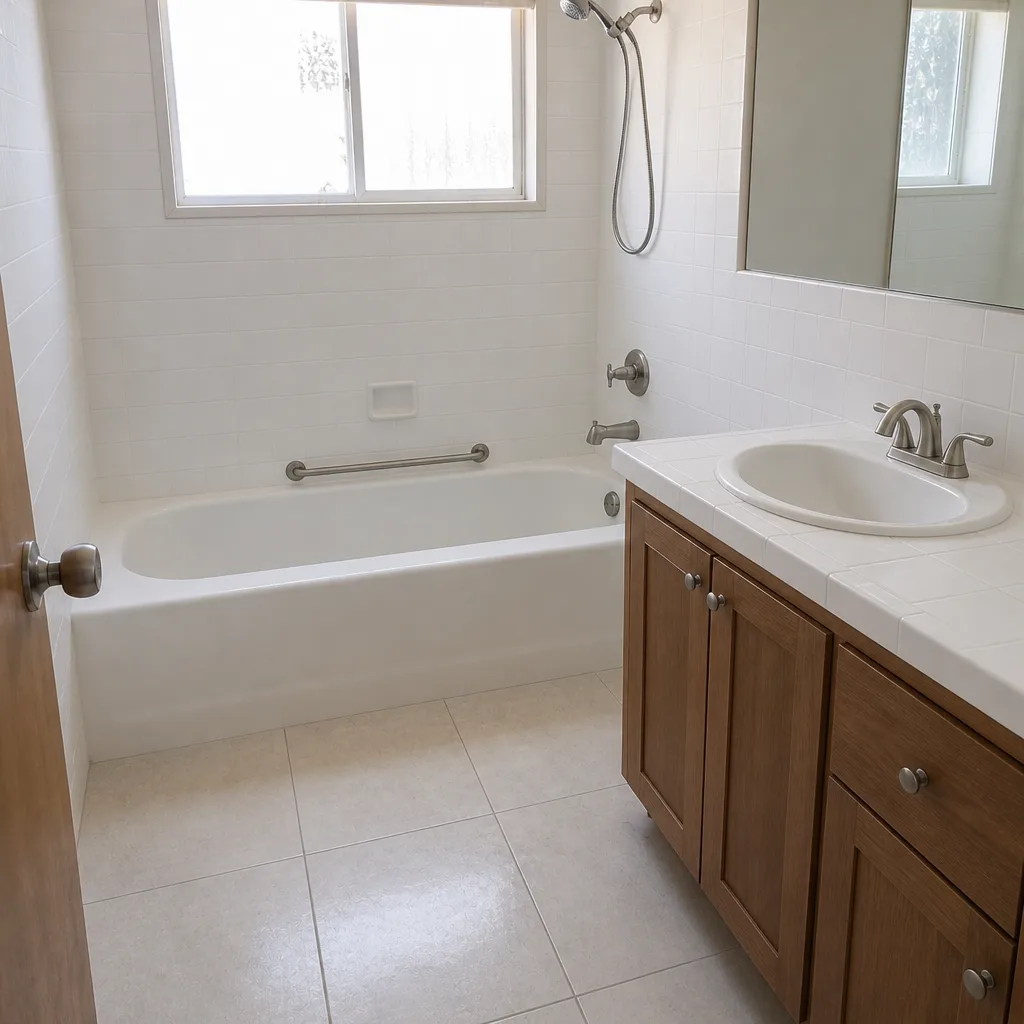
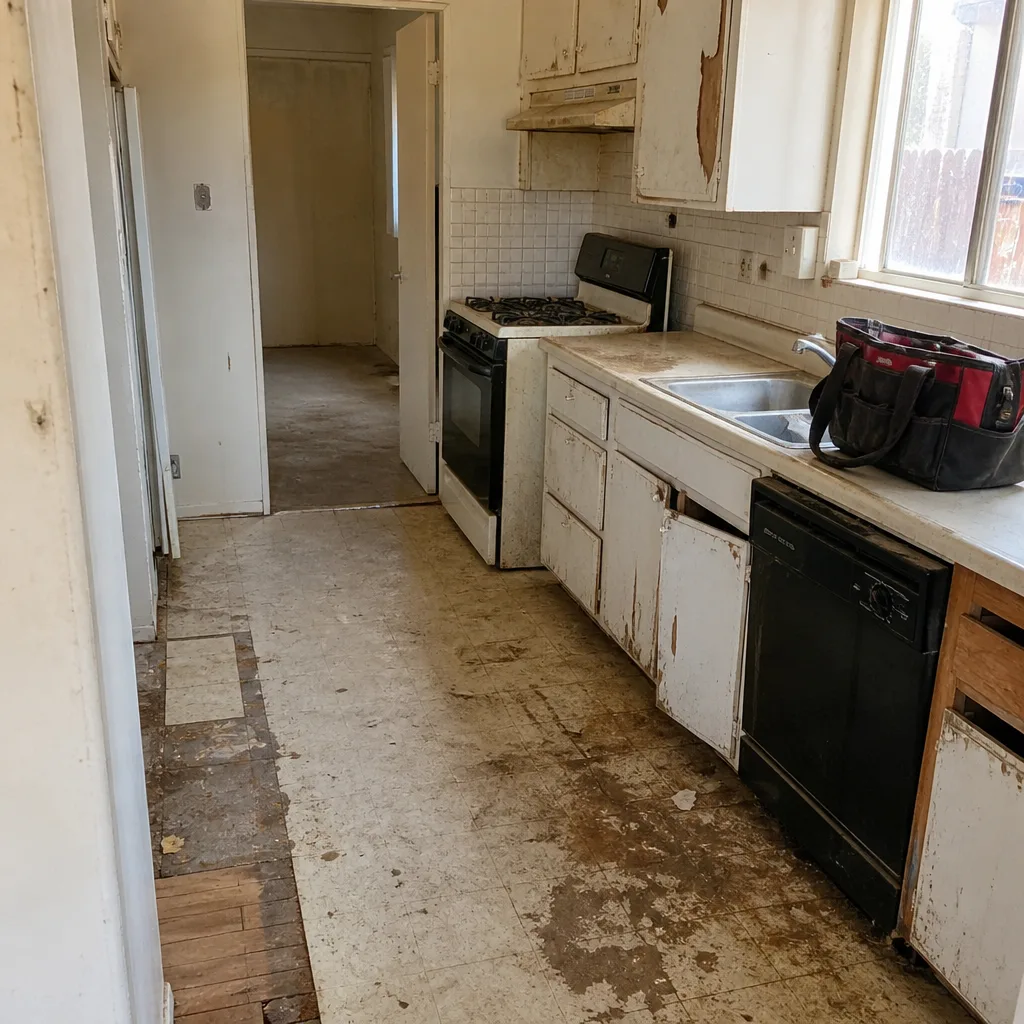
See the difference
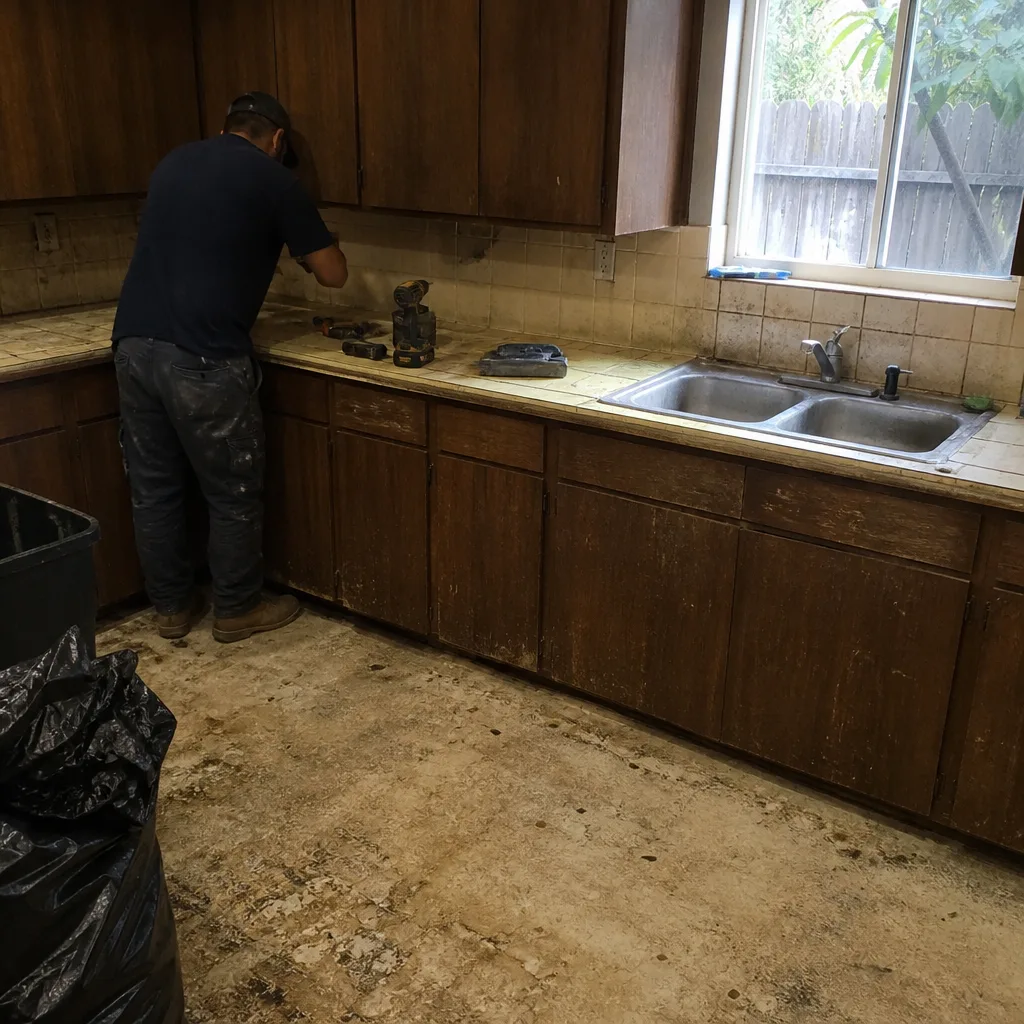 Before
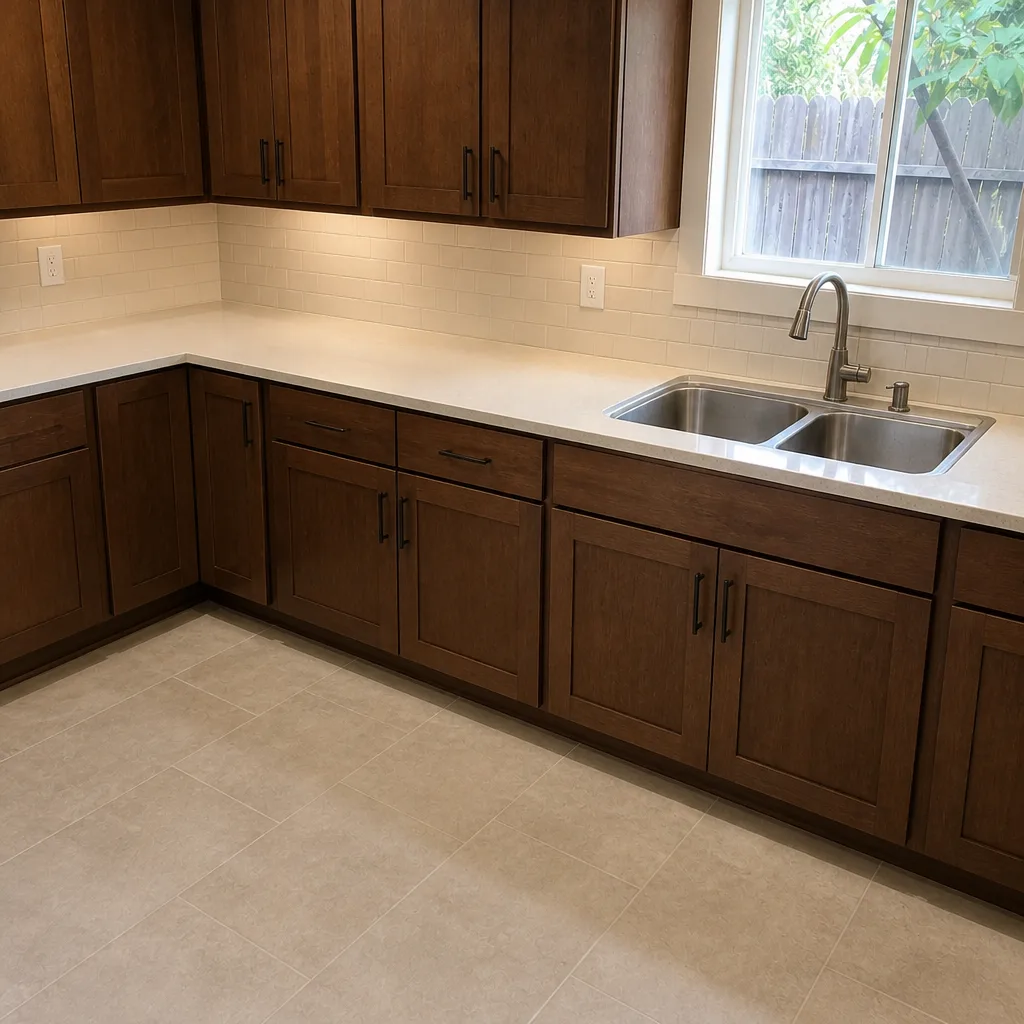 After
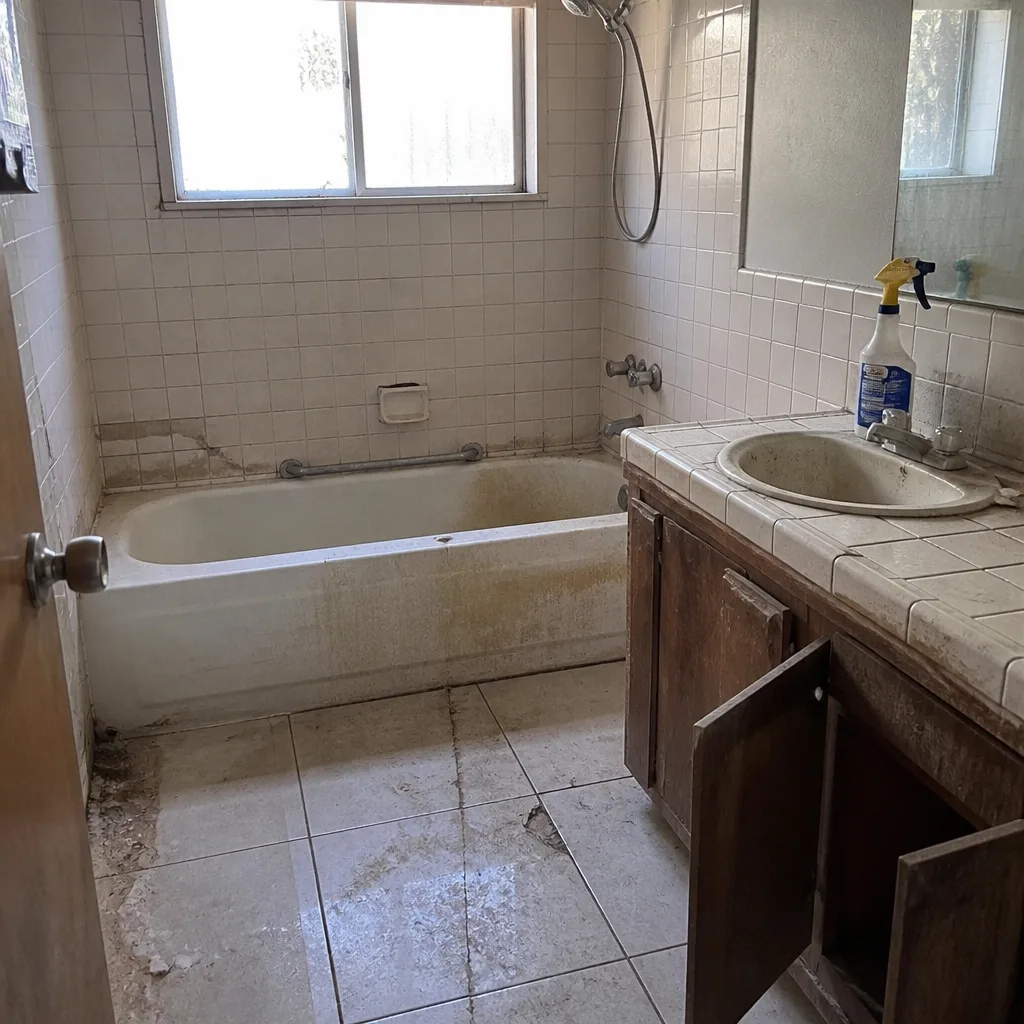 Before
 After
 Before
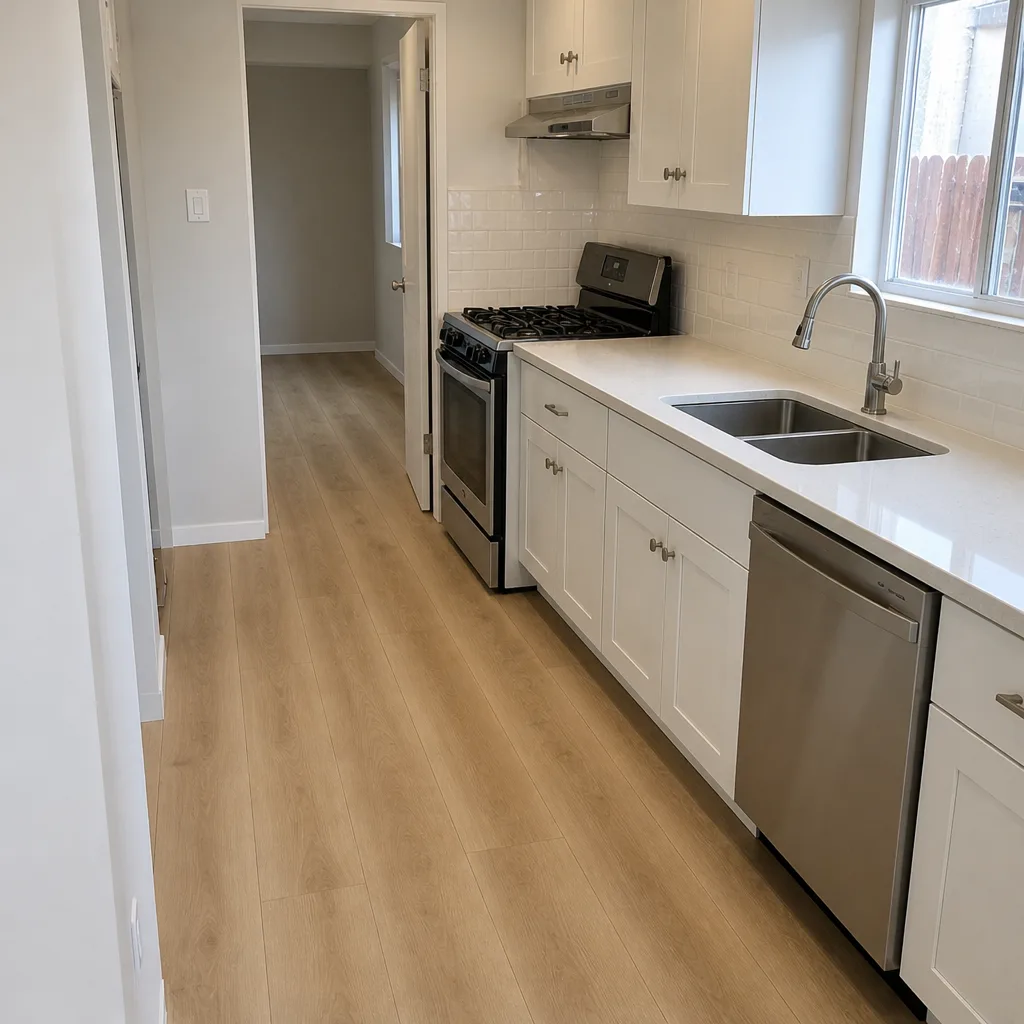 After
When to Call a Professional

Maintenance is a homeowner habit, but repair is a professional’s job – and some situations are simply outside a weekend’s DIY scope. Call a professional if you find water staining at a wall, cabinet box or threshold that you can’t trace; if a tile shows a crack wider than a hairline or that spans several tiles; if flooring transitions are failing across a room; if a wet joint keeps failing after re-caulking; or if a bathroom or kitchen exhaust fan has stopped pulling properly. Anything that might relate to plumbing, electrical or structural movement deserves a trained eye rather than a patch job. On the exterior, water penetrating through a siding, window or door issue should be diagnosed promptly, before the damage reaches the wall.
We offer free estimates in Elk Grove, with written line-item quotes that lay out exactly what we recommend and why. The written estimate sets the price and nothing changes after work starts. Call (279) 333-1458 to schedule. We answer 24/7. Fast dispatch from 7am to 7pm, Sunday through Friday.
Frequently Asked Questions
Twice a year, matching the two-season rhythm above: once in late fall after the rains return, and once in late spring after the shrink phase. In high-use showers, add a monthly glance. Elk Grove’s clay soils move the interior finishes quietly, and the twice-yearly check catches changes while they’re still small. Call (279) 333-1458 if you find a joint that won’t stay sealed – estimates are free.
Yes. Slab homes here flex with the seasonal wet-dry cycle of our clay soils, and that shows up first in grout lines, caulk joints, flooring transitions and cabinet toe-kicks. Tile over slab benefits most from crack isolation membrane, and post-remodel maintenance should include a careful inspection of these areas each season. Call (279) 333-1458 for a free estimate on any repairs you find.
Yes. Every estimate is free, comes in writing with a line-item breakdown, and sets the price for the work. There are no change orders once work starts, and the price you sign off on is the price you pay. Call (279) 333-1458 to book a visit. We answer 24/7, with fast dispatch from 7am to 7pm, Sunday through Friday.
LVP is the most forgiving of our soil movement – it flexes rather than cracks, so upkeep is mostly cleaning and watching the transitions. Hardwood needs humidity stability and periodic buffing or refinishing as the Sacramento valley swings from wet to dry. Tile shows movement as hairline cracks in the grout lines first, so yearly sealing and prompt repair keep it stable. We’ll show you the options at each price point so the material matches the maintenance you’re prepared to do.
Running AC five-plus months a year affects humidity, airflow and pressure inside the home – all of which shape how paint, caulk and cabinetry wear. Change filters, keep the condensate drain clear, and don’t block return air grilles, especially after new cabinetry or furniture goes in. If indoor humidity swings hard, that’s a ventilation issue worth addressing. Call (279) 333-1458 for a free estimate on any remodeling follow-up.
Yes, they set the intervals. KraftMaid and Wellborn cabinetry, Cambria, Silestone and Caesarstone quartz surfaces, and Kohler, Grohe and Toto fixtures all carry manufacturer care guidelines and warranty coverage that assume routine re-sealing, re-caulking and cleaning. Keep the spec sheet and the brand names handy – they’re the first thing anyone asks when a warranty question comes up. Call (279) 333-1458 for a free estimate on any repaint or refresh under a warranty interval.
The Bottom Line

Maintaining a remodeled Elk Grove home comes down to two seasonal walkthroughs, a short list of kitchen and bath checks, a working knowledge of your flooring’s maintenance profile, and a calendar of milestones at the one-, three- and five-year marks. Elk Grove’s clay soils and dry summers mean the specific points of failure are predictable – grout, caulk, cabinet toe-kicks and flooring transitions – so the checklist is shorter and more focused than the generic version. Keep your documentation, stay on top of the exterior, and treat the maintenance as part of the remodel, not an afterthought. If you want a written plan or a free estimate for any repair or refresh, call (279) 333-1458. We answer 24/7. Fast dispatch from 7am to 7pm, Sunday through Friday.
Written by the team at Elk Grove Remodeling.