Last updated November 25, 2026







Free written scope consultation - allowances, timeline, and change-order rules on paper before a single trade is scheduled
Construction Emergency Preparedness Guide for Elk Grove Homes
Most homeowners think a construction emergency is a burst pipe. It usually isn’t. It’s the three days after a burst pipe, when the water is gone but nobody photographed the swollen cabinet base, nobody saved the failed supply line, and the insurance adjuster is standing in your kitchen asking what happened first. The decisions made in the first 24 hours after a construction emergency are the ones that decide how much gets covered and how much becomes permanent. This guide is written for Elk Grove homeowners who want a protocol ready before they need one: what to document, who to call, what not to touch, and how a remodel should be set up so a failure never turns into a claim fight.
Quick Answer
A construction emergency in Elk Grove means a water line, roof opening, or structural crack that’s actively causing damage and needs a documented response within 24 hours. The correct first moves are to stop the source if it’s safe, photograph everything before you move it, preserve the failed part, and call both your insurer and a licensed contractor. Documentation taken in the first few hours is what protects your claim, and having it ready before a remodel starts is what makes that possible.
Styles & brands we work with
- Kitchen remodeling
- Bathroom remodeling
- Home additions & ADU
- Roofing
- Windows & doors
- Driveway & pavers
- Fence
Table of Contents
- The Documentation Protocol: What to Photograph and What Not to Touch
- Elk Grove’s Specific Construction Risks
- How to Find an Emergency Remodeling Contractor Without Getting Locked Into Predatory Pricing
- What Homeowner’s Insurance Covers When a Remodel Reveals a Pre-Existing Problem
- Emergency Preparedness Before Your Remodel Begins
- Utility Shutoffs: Where They Are and How to Confirm They Work
- The First 24 Hours: A Step-by-Step Response
The Documentation Protocol: What to Photograph and What Not to Touch
Photograph the damage first, before you move or clean anything. An adjuster builds a claim from evidence, and evidence you’ve already mopped up no longer exists. The single most common reason a legitimate construction-related claim gets reduced is that the homeowner cleaned up before anyone documented it.
When a supply line fails behind new cabinetry, several parties have different interests in the sequence of events. The cabinet manufacturer cares whether the failure came from the installation. Your plumber cares whether the fitting was defective or the line was damaged later. Your insurer cares whether this is a sudden event or a slow leak that went unattended. A contractor’s written record from the install protects you in all three conversations, which is why we keep the paperwork on every phase of a project.
What to photograph, in this order
- Wide shots of each affected room from the doorway, before you enter or move anything.
- Close shots of the point of failure – the split line, the cracked fitting, the separated joint – from two angles.
- The water line or stain on flooring, drywall, or cabinetry, with something for scale (a tape measure laid alongside works).
- Serial numbers and labels on any appliance or fixture involved.
- Any visible mold or discoloration, even small patches, photographed in place.
- Your overall room condition, so the adjuster can see this was a finished, maintained space rather than an ongoing problem.
What not to touch
- The failed part. Don’t throw away the split supply line or cracked fitting. Save it in a bag. It’s the physical evidence of the cause.
- Wet drywall you plan to claim. Photograph it first. Cutting it out is often correct, but only after documentation.
- Standing water near an electrical panel or outlet. Never wade in or reach into it. Shut the power at the panel only if you can reach the panel through dry ground.
- Gas-smelling areas. Leave the house and call your utility from outside. Don’t flip switches on the way out.
Those last two points matter. Water and electricity together, or a gas line, is a scenario for a trained professional, not a homeowner with a shop vac. We say this plainly because we’ve seen what happens when someone doesn’t.
Elk Grove’s Specific Construction Risks
Elk Grove’s risk profile is shaped by its soil, its summers, and its location in the Sacramento Valley. Three failure patterns show up here more than in many other places, and knowing them tells you where to focus your preparedness.
Ground movement and clay soils
Much of the Elk Grove area sits on expansive clay soils that swell with winter moisture and shrink through the dry season. Over years, that cycle works on foundations, slabs, and the joints where additions meet original structure. Hairline cracks in drywall that reappear after every wet season, doors that stick in late summer and free up in winter, and gaps at exterior trim are the early signals. They’re not automatically an emergency, but a crack that widens noticeably in a short window, or any displacement at a slab edge, deserves a professional look before you finish over it. Painting or patching a moving crack without addressing the movement is a mistake we see often.
Summer HVAC strain and interior moisture
Elk Grove summers push cooling systems hard. When a system fails during a heat stretch, the interior response is often to open windows and run fans, which pulls hot, humid outside air into a cooled house. That air condenses on cold surfaces – tile floors, plumbing fixtures, cabinet interiors – and creates moisture where you’d never expect it. If your AC fails mid-summer, watch for condensation on hard surfaces and around plumbing walls, and don’t ignore a musty smell near a bathroom or kitchen wall. That’s a moisture problem, not just an inconvenience.
Valley flooding proximity
Parts of Elk Grove sit close to drainage channels and low-lying areas that can pond quickly during heavy winter storms. If your property is near a drainage corridor, your priorities shift: know where water would enter, keep gutters and yard drains clear before the rainy season, and store anything vulnerable in the garage or lower storage off the floor. Foundation waterproofing and drainage corrections are projects worth planning deliberately, not reacting to mid-storm.
None of this makes Elk Grove a risky place to own a home. It makes it a place where a few specific preparations go further than generic advice does.
How to Find an Emergency Remodeling Contractor Without Getting Locked Into Predatory Pricing
After a construction emergency, you’re vulnerable to the contractor who shows up fast with a clipboard and a number you can’t verify. Protect yourself with three habits: get a written, line-item estimate, confirm the contractor is licensed and insured, and never sign a contract that requires a large deposit before any work is scoped.
Post-disaster pricing works on urgency. The homeowner doesn’t have time to comparison-shop, so the first bid becomes the only bid. Here’s what to check before you commit to anyone:
- A written, line-item estimate. Every material and labor line priced separately. Vague lump sums are where change-order surprises hide. We give every client a line-item written estimate, and the price on that estimate is the price.
- State licensure and insurance. Confirm the contractor is licensed and insured as their state requires, and ask for the documentation. A legitimate contractor won’t hesitate.
- No large upfront deposit. A deposit sized to a real material order is normal. A demand for half the project cost before work starts is a warning sign.
- Permits pulled. Ask directly whether the contractor will pull the required permits. Most cities require a permit for structural, electrical, plumbing, and major remodeling work, and the permit and inspection are your protection, not paperwork.
- A workmanship warranty in writing. Ask how long it runs and what it covers.
- Material transparency. You should know the exact brand and model of every product going into your house, from cabinetry to fixtures. If a contractor can’t tell you what’s being installed, that’s a problem before the contract, not after.
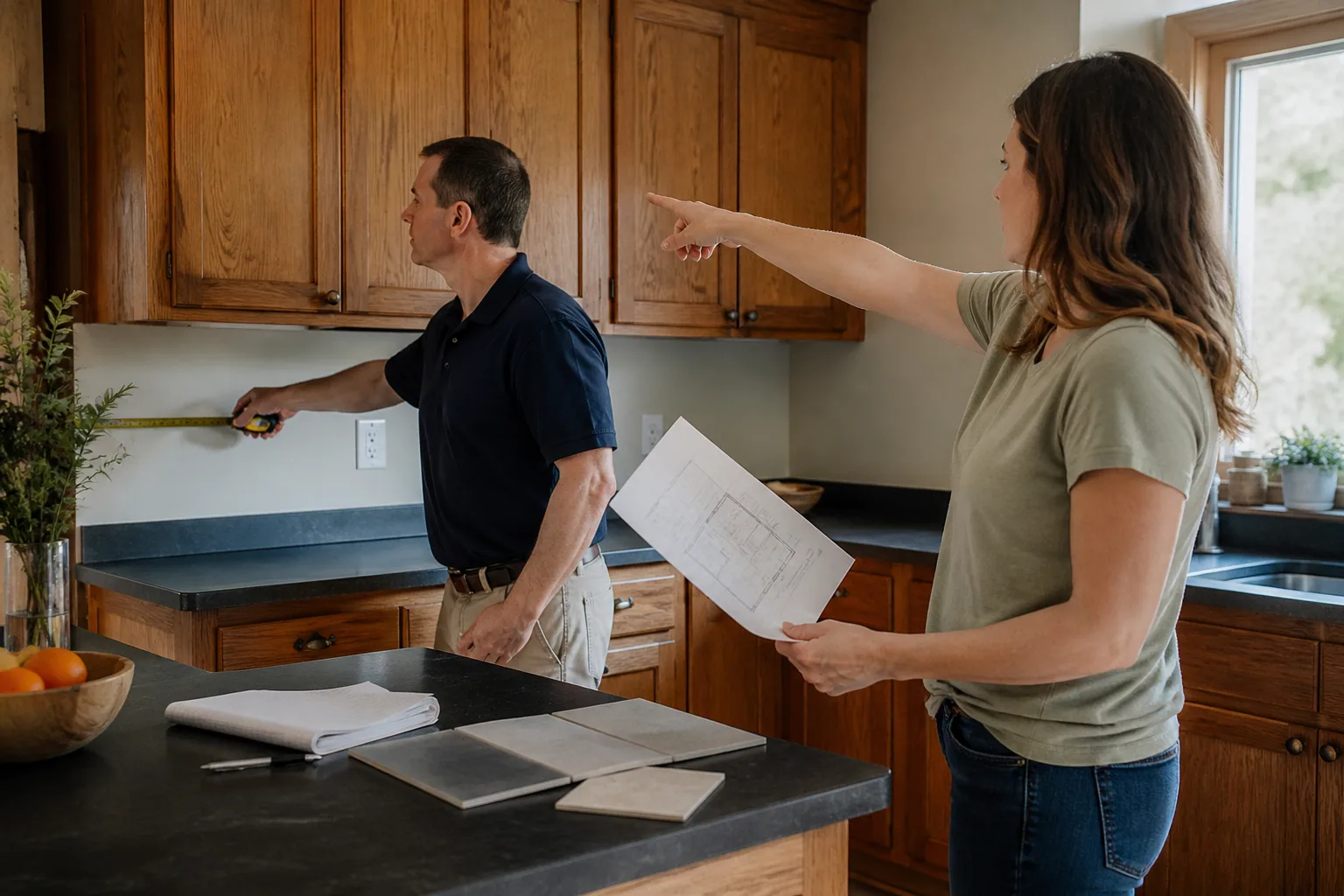
The best defense is a relationship built before the emergency. If you have a contractor who already knows your home’s systems and finishes, a construction emergency becomes a phone call instead of a search. Our team works across Elk Grove Remodeling projects that way – one contractor, every phase, with all the material specs on record. If your next project involves a kitchen, having the cabinet and countertop paperwork organized is simpler when one contractor handles kitchen remodeling, plumbing, and finish work together.
What Homeowner’s Insurance Covers When a Remodel Reveals a Pre-Existing Problem
Homeowner’s insurance typically covers a sudden, accidental event – a supply line that bursts, a roof that opens in a storm – but not the slow deterioration that was already underway. The dividing line is sudden versus gradual, and documentation is what proves which side your claim falls on.
This is where construction emergencies get complicated. Say a remodel opens a wall and finds water staining around a shower valve that had been leaking slowly for a long time. The insurer is likely to treat that as a pre-existing condition and exclude it, even though the remodel also triggered an event you need covered. Understanding the split before you’re in it is worth an hour of your time.
Generally covered
- Sudden water damage from a failed supply line, fitting, or appliance.
- Storm damage that opens a roof or breaks a window.
- Damage from a fire or fire-suppression incident.
- Most interior damage that follows a covered event, such as drywall ruined when a line bursts.
Generally excluded
- Slow leaks and the rot or mold they cause over time.
- Damage from deferred maintenance you knew about.
- Failed construction materials where the failure is the installation itself.
- Wear and deterioration, however visible.
A professional contractor’s documentation is what separates a covered sudden event from an excluded slow one. Photographs taken during a project, written records of installation dates and material specifications, and a report from a licensed contractor about what caused the damage all strengthen a claim. This is also why our team keeps material records – the exact cabinet line, the exact fixture model, the install date. That record is what a manufacturer’s warranty claim and an insurance claim both lean on. If you’re documenting a home with multiple recent projects, the same discipline applies to bathroom remodeling, where water is the most common failure point. Ask your insurer what documentation they require before you need to file, and keep it with your policy.
Emergency Preparedness Before Your Remodel Begins
Before the first demo day, build a simple emergency file and walk your home’s shutoffs with your contractor. Ten minutes of preparation before a project is worth far more than an hour of scrambling after one.
The pre-remodel checklist
- Locate and label your water main shutoff, gas shutoff, and electrical panel. Know how to operate each one, and have the tool on hand if a shutoff requires one.
- Test the water main shutoff to confirm it actually closes. A shutoff that won’t fully close is useless in an emergency, and it’s a cheap fix.
- Photograph the exterior and interior of your home as it stands before work begins, room by room, with dated files.
- Keep a folder of material specifications for every product installed – brand, model, and install date. Cabinetry, countertops, and fixtures all have their own manufacturer warranties, and those warranties depend on documented installation.
- Get your contractor’s emergency contact protocol in writing: who to call, how quickly the line is answered, and how a dispatch gets booked.
- Confirm your insurance policy’s current coverage and deductible, in writing, before work begins.
- Store a copy of these records somewhere other than the house, or in a fireproof box, in cloud storage, or with a trusted family member.
One word on emergency contact protocols. Our phone line is answered 24/7, and we send crews fast dispatch from 7am to 7pm, Sunday through Friday. If you’re starting a project with us, you’ll have the number and the protocol before day one. If you’re starting a broader renovation that covers several rooms, our home remodeling process includes this file as part of the project setup.
Utility Shutoffs: Where They Are and How to Confirm They Work
Knowing where your shutoffs are isn’t enough. You need to have operated them and confirmed they close completely, and you need to know which ones are safe for you to touch in an emergency and which aren’t.
Water main shutoff
Find the main water shutoff first. It’s typically in an accessible spot – a utility area, the garage, an exterior wall near the meter. Confirm it’s the whole-house valve and not a fixture valve. Test it by tightening it closed and looking for any drip from a faucet, then reopen it. If it’s seized or won’t fully close, call a plumber and have it replaced. This one valve is where most water emergencies are stopped, and a seized one is the difference between a small cleanup and a flooded floor.
Gas shutoff
The gas shutoff is a home’s most important safety item after water. Locate the valve at the meter. If you smell gas, leave the house first, then call the utility from outside. Don’t operate the valve yourself unless you’ve been shown how and are sure of it – utility technicians are the correct call every time there’s any doubt. This is a component to leave to trained professionals.
Electrical panel
Know the location of your main breaker and which breaker controls which area. Don’t handle a panel if you see standing water near it, obvious damage, or a burning smell. Turn off the main only if you can reach the panel through dry ground and the panel itself is dry and undamaged. The panel interior carries lethal current, and any repair inside it needs a licensed electrician. This is not a component to troubleshoot yourself.
Confirm all three shutoffs with your contractor before work starts. Walk through them together, and write the locations in your emergency file. When something goes wrong, the difference between a stop and a flood is knowing where to go.
The First 24 Hours: A Step-by-Step Response
The first 24 hours after a construction emergency have a sequence. Get the order right and you protect both the property and the claim.
- Get safe. If there’s gas, fire, or standing water near electricity, get out and call the utility. If you can safely stop the source at a shutoff, do it.
- Photograph everything before you move or clean anything, following the documentation protocol above.
- Preserve the failed part. Bag it, label it, keep it.
- Contain further damage safely. Towels and a bucket for a small leak are fine. Don’t open walls or pull up flooring before documentation, and don’t touch anything near a wet electrical panel.
- Call your insurer. Report the event, ask what documentation they need, and ask about your deductible and coverage limits before you commit to repairs.
- Call a licensed contractor for a documented assessment. A written report on what caused the damage, what needs replacing, and what can be salvaged is the document the insurance process runs on.
- Get a written, line-item estimate before any work starts. No lump sums, no large deposits, and no work before the estimate.
Speed matters because damage compounds and evidence disappears. Our team can be reached by calling the number below. We answer 24/7, and we book crews with fast dispatch from 7am to 7pm, Sunday through Friday. A call outside those hours gets booked into the next opening, which is the right way to handle a non-emergency follow-up after the immediate risk is contained.
Common Mistakes to Avoid
- Cleaning up before photographing. Two minutes with a mop can erase the evidence your adjuster needs. Photograph first, clean second.
- Throwing out the failed part. The split line or cracked fitting is the proof of cause. Save it.
- Patching a moving crack in Elk Grove’s clay soils. Covering the symptom without addressing site drainage or foundation movement means the crack comes back, and the repair money is gone.
- Accepting a fast bid without a line-item breakdown. Emergency pricing thrives on urgency. Insist on written, itemized figures and compare them before signing.
- Skipping the permit to get work underway. Most cities require a permit for structural and major remodeling work. Unpermitted repairs can complicate a future sale and undermine your insurance position.
- Not knowing where the shutoffs are. Every minute spent searching for the water main is a minute the water keeps spreading.
- Ignoring musty smells in warm months. A summer HVAC failure and a condensation problem behind a wall can turn into mold before you see a stain. Have it checked in the first days, not after it grows.
See the difference
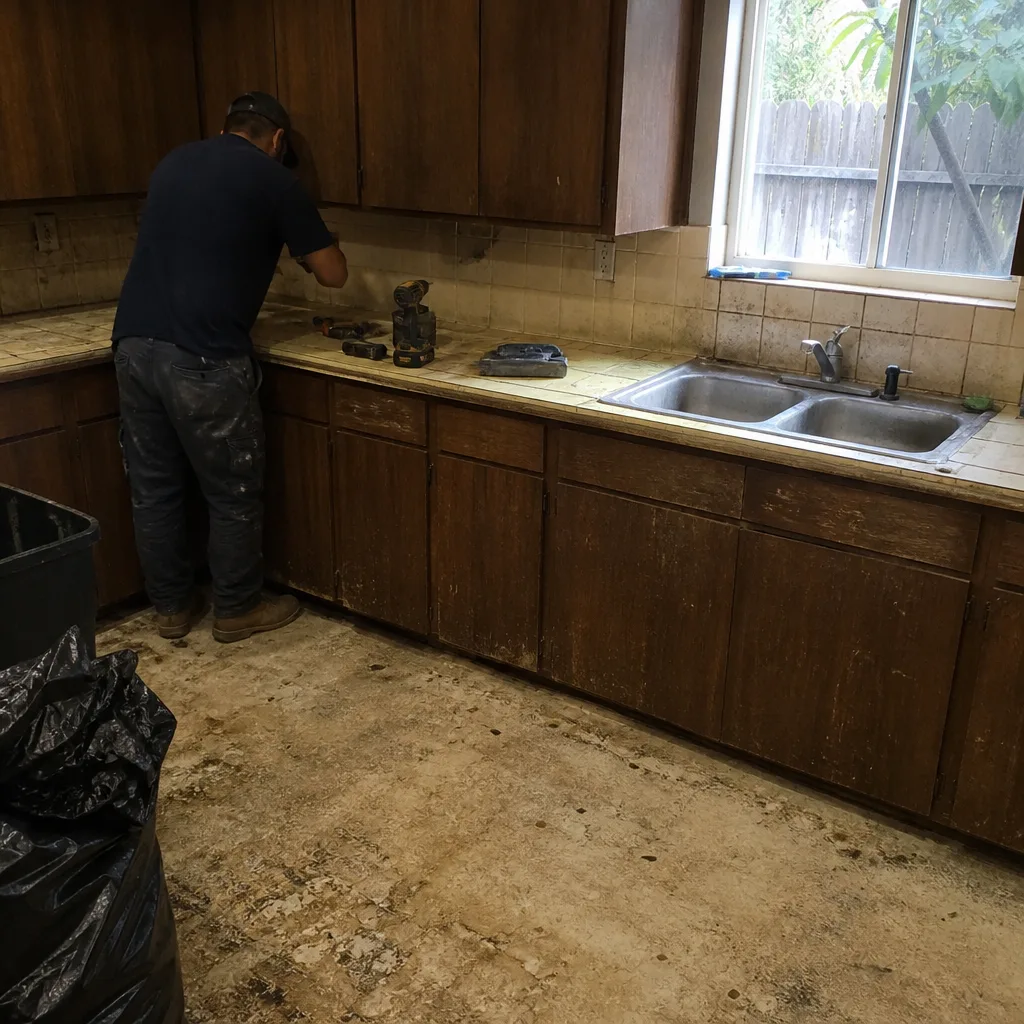 Before
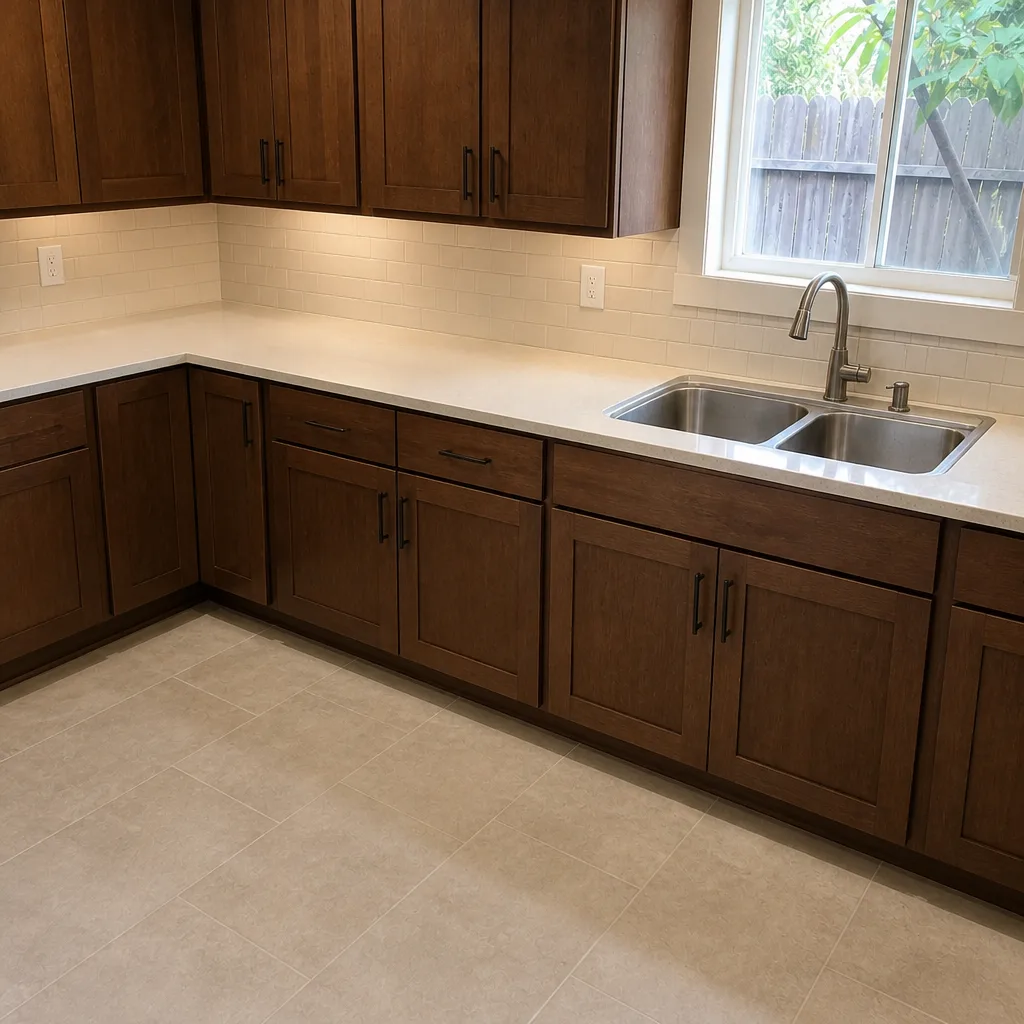 After
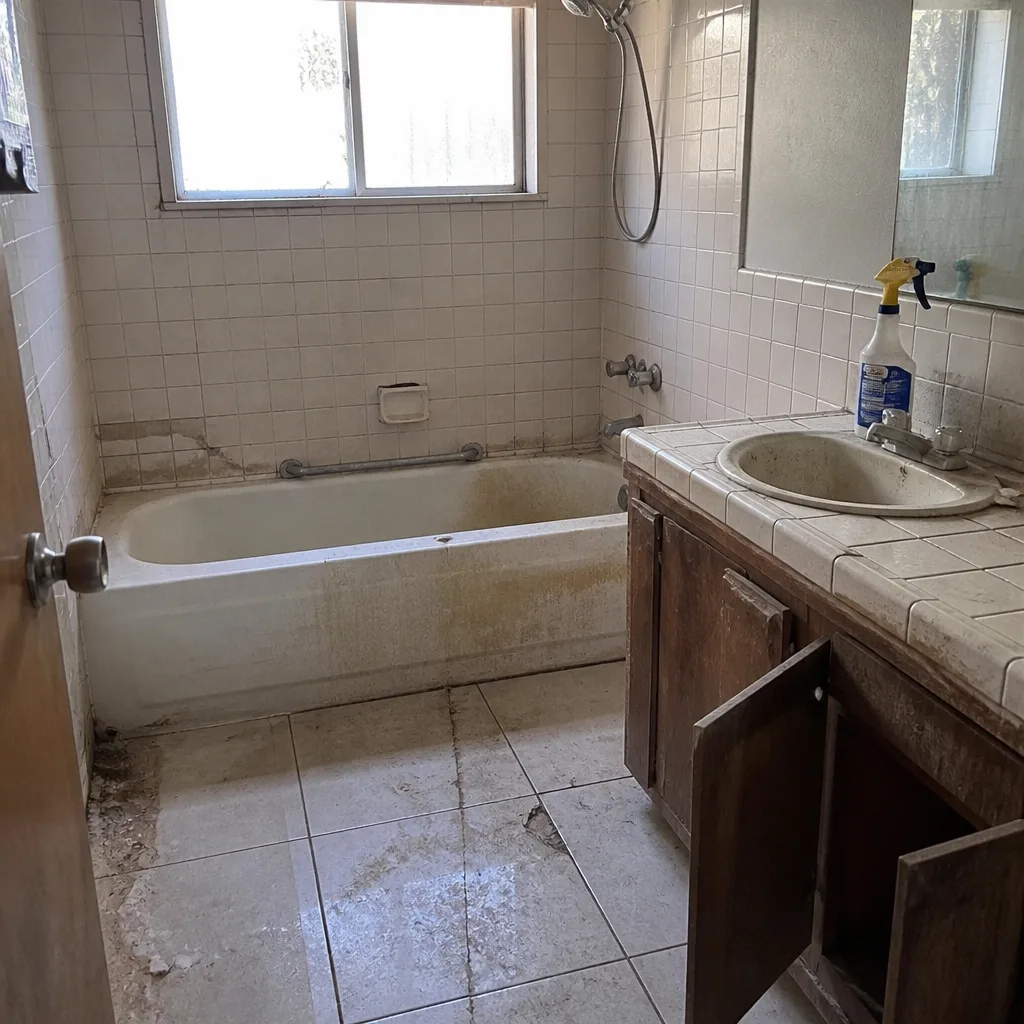 Before
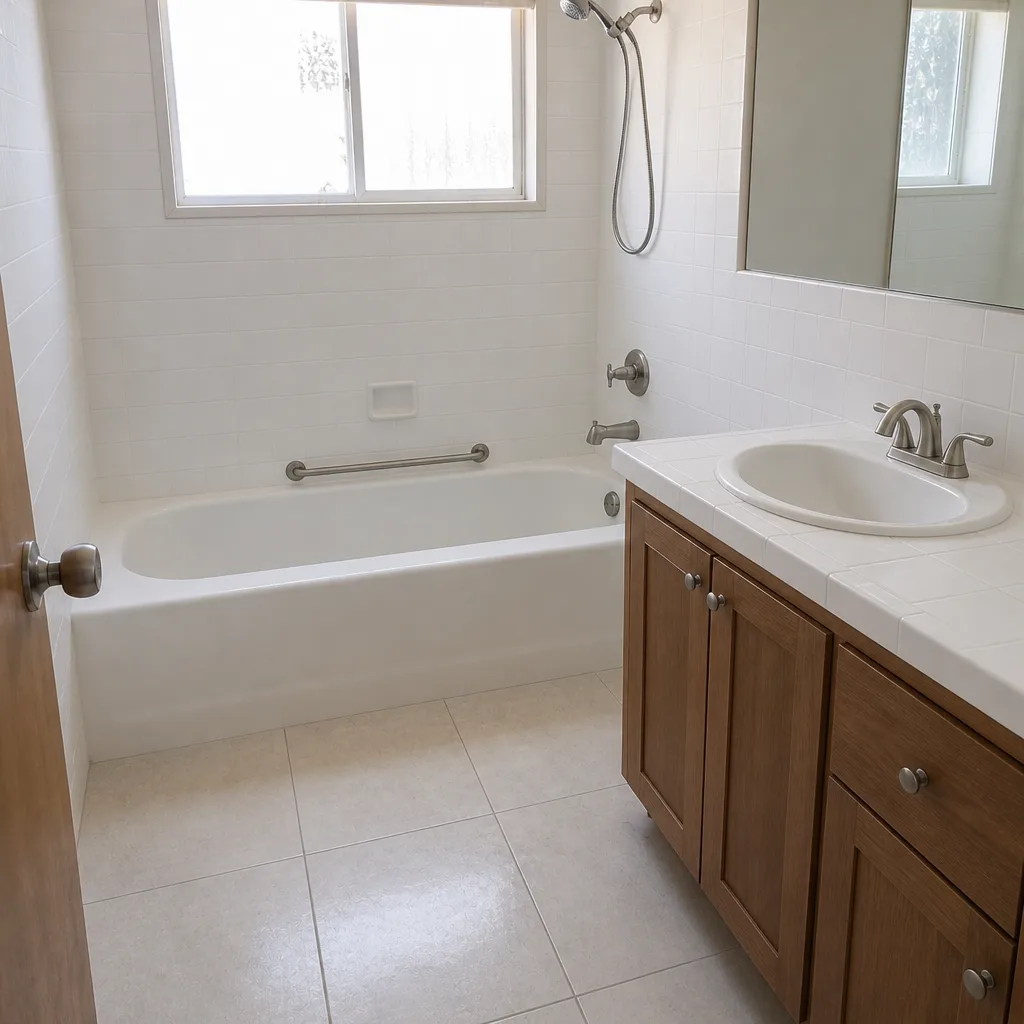 After
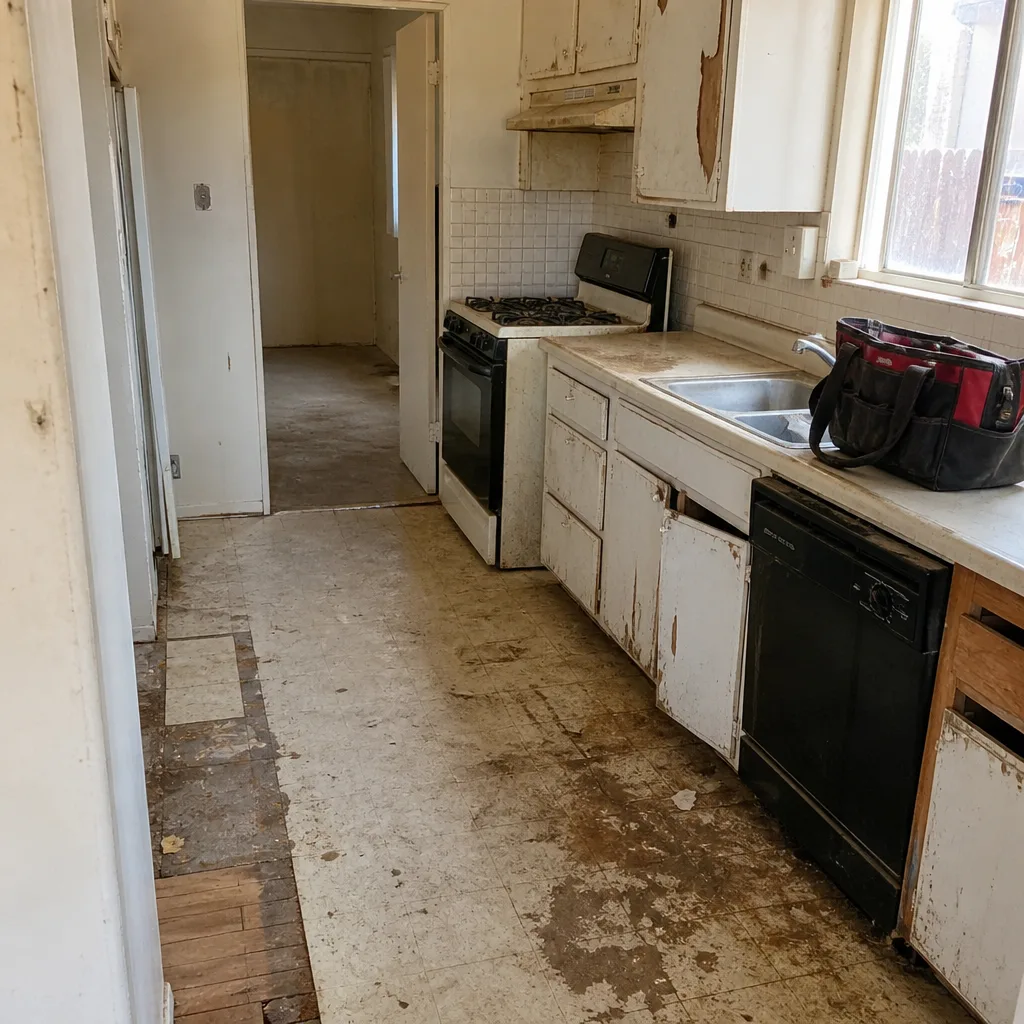 Before
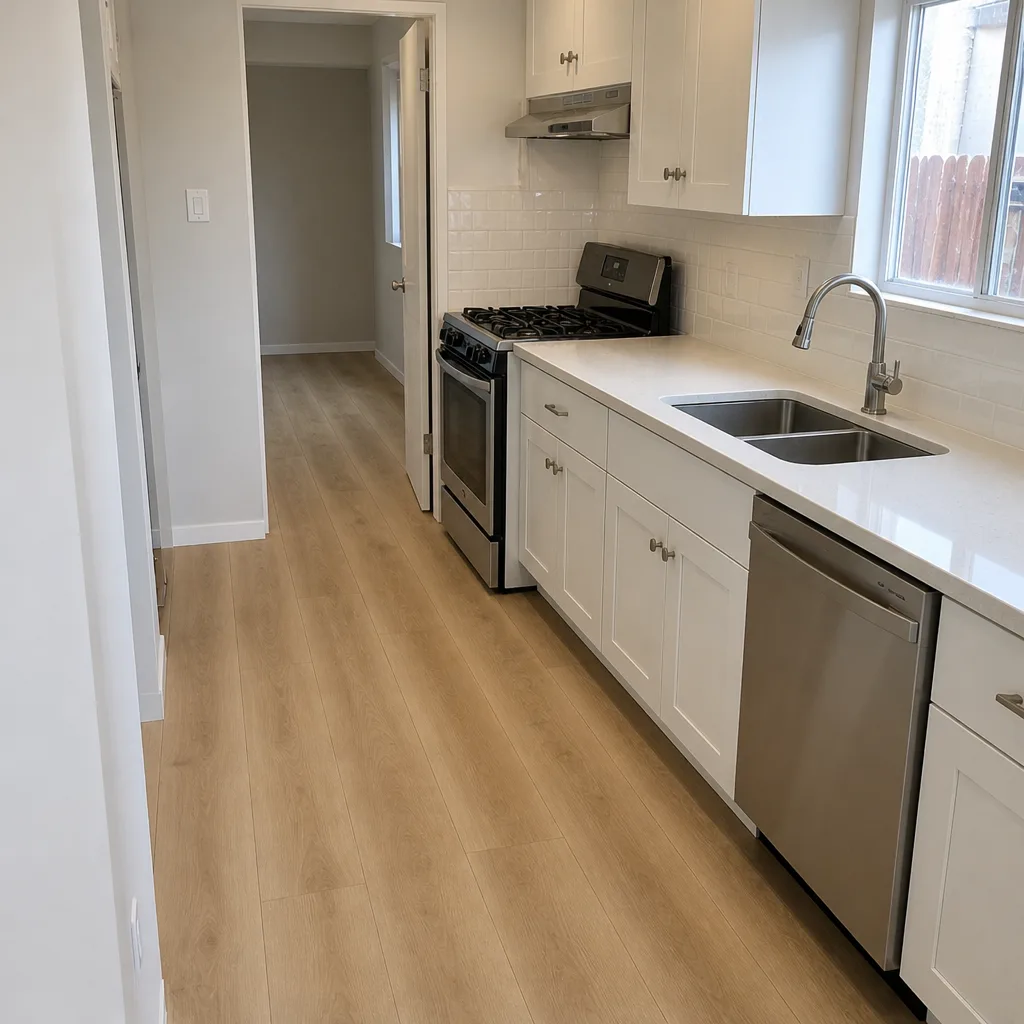 After
When to Call a Professional
Call a professional for any water line failure that soaked beyond a small area, any crack or displacement at a foundation or slab edge that changed quickly, any roof opening or storm damage, any moisture that appears behind or below a wall, and anything touching a gas line or an electrical panel. Those are the situations where a trained professional isn’t optional. Call us for the assessment and a written estimate. Elk Grove Remodeling offers free estimates in Elk Grove – call (279) 333-1458. We answer 24/7, with fast dispatch from 7am to 7pm, Sunday through Friday. The estimate is written, line-item, and the price on it is the price. Our technicians have up to 14 years of experience, and our team knows what a documented response to a construction emergency looks like.
Frequently Asked Questions

Stop the water at the main shutoff if you can do it safely, then photograph the damage before you clean anything. Call your insurer and a licensed contractor to document the cause. Do not wade into standing water near an electrical panel, and do not touch a panel that’s wet or damaged. Call (279) 333-1458 for an assessment – estimates are free.
It usually covers the sudden, accidental event, such as a burst supply line or storm damage, and usually excludes slow leaks, rot, mold, and deferred maintenance. Documentation is what proves which one you’re dealing with. Ask your insurer what they require before you file, and call (279) 333-1458 for a contractor’s written report that strengthens the claim.
The estimate is free, and the price is set per job by the written estimate. There’s no service-call fee, no trip charge, and no surprise line items. Call (279) 333-1458 to schedule your free estimate.
No. We give a written, line-item estimate before work begins, and the price on that estimate is the price. Change orders only happen when you request a change in scope. Call (279) 333-1458 for a written estimate.
Yes – permits are required for most structural, electrical, plumbing, and major remodeling work, and the permit and inspection protect you. We include permit work in the written estimate. Call (279) 333-1458 to discuss your project.
Ask for a written line-item estimate, confirm the contractor is licensed and insured as their state requires, confirm the permits will be pulled, and get the workmanship warranty in writing. Never sign a contract requiring a large deposit before work is scoped. Call (279) 333-1458 for a free estimate.
The Bottom Line
Construction emergencies are won or lost in the first 24 hours, and most of that time is spent on documentation, not repairs. Photograph before you clean. Save the failed part. Know where your shutoffs are and confirm they work. Have a written, line-item estimate before anyone starts. In Elk Grove, clay soils, summer heat, and valley weather add specific risks, but the same protocol handles them all. Build your emergency file before your next remodel, not after. When something does go wrong, call a professional who gives you a written estimate and a documented response.
If you’re planning a renovation or dealing with the aftermath of a construction emergency, we can help. Call (279) 333-1458 for a free estimate. We answer 24/7, and we book crews with fast dispatch from 7am to 7pm, Sunday through Friday. From the first demo day to the final coat of paint, our team works with the materials and the records that protect your home and your claim.
Written by the team at Elk Grove Remodeling.